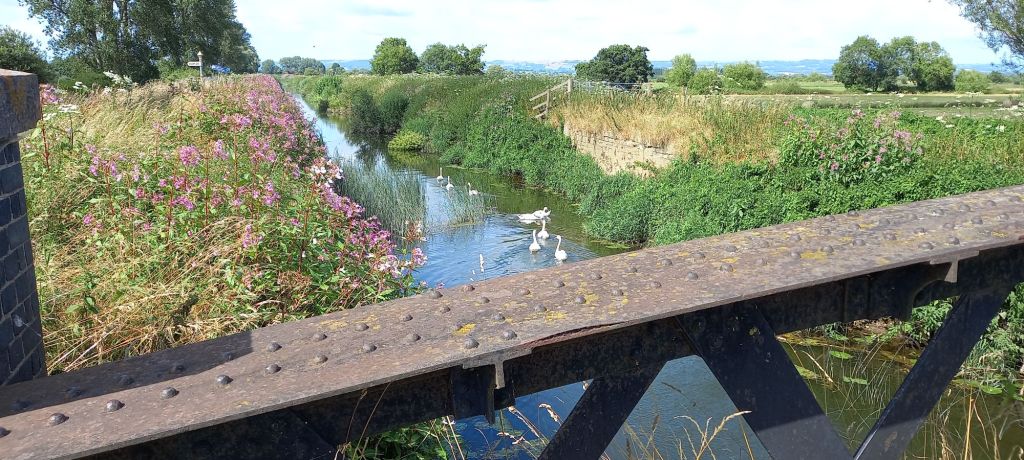
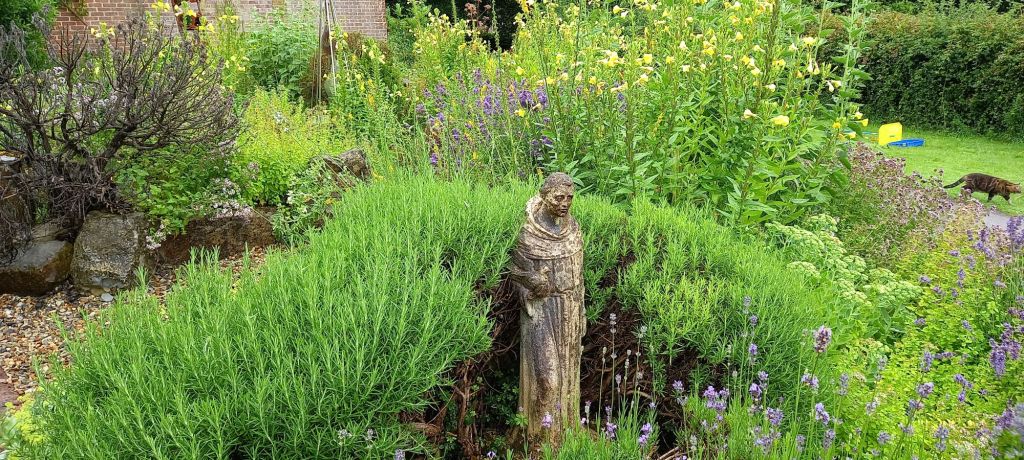
For the final part of the Celtic way, I cycled south of Glastonbury through an area of marshes and canals. I noticed some areas with massive piles of peat and some of the trucks and diggers were busily covering some of the marsh areas with a layer of it. At the campsite I enquired about this and was told that they were rewilding the area for nature conservation. From Somerset, I travelled further south to Dorset and arrived at the community of Hillfield Friary on July 24th. I was given a friendly welcome and shown to my room and a place to store my bike. I stayed for a full day a second night as a way to rest and reflect on the trip so far. The weather during the next day turned out quite rainy with fog and low cloud in the morning. The chapel services were led by the monks and included their traditional way (Franciscan) to sing the Psalms and other biblical words. There was also a time to sing hymns and pray for situations in the world and people in need. The meals were quite simple but tasty and home made bread was provided for the tea breaks and breakfast. I had a chat with quite a few who were there and not all were practicing Christians.
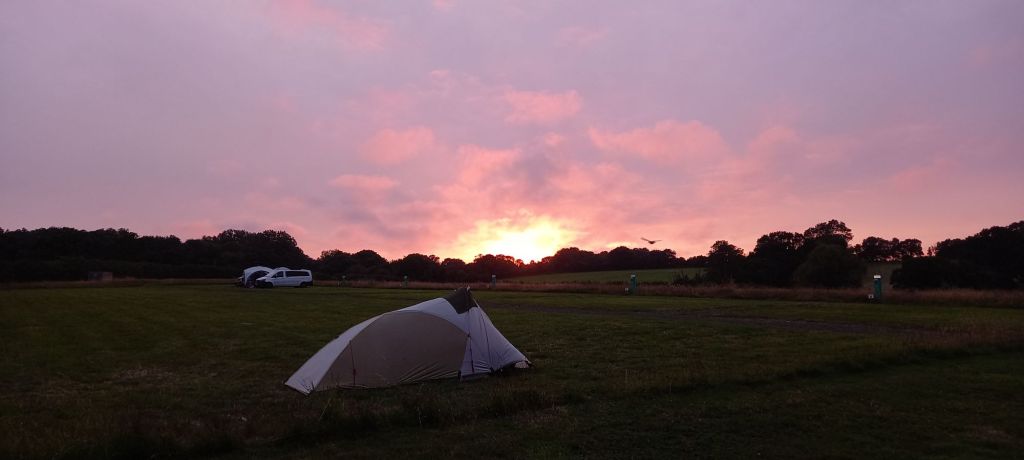
On the Friday I set off on a long ride, firstly to Dorchester, then Martinstown and a number of old hamlets and villages in southwest Dorset. I then crossed over into Devon and found the atmosphere seemed more cycle friendly as the route took me along the coast to Exmouth. There was a short ferry ride at the far end of the estuary and after a long day of around 50 miles, arrived at a chicken farm above the seaside town of Teignmouth. The campsite was quite basic amongst the apple orchard trees and besides the chicken coupes on one side.
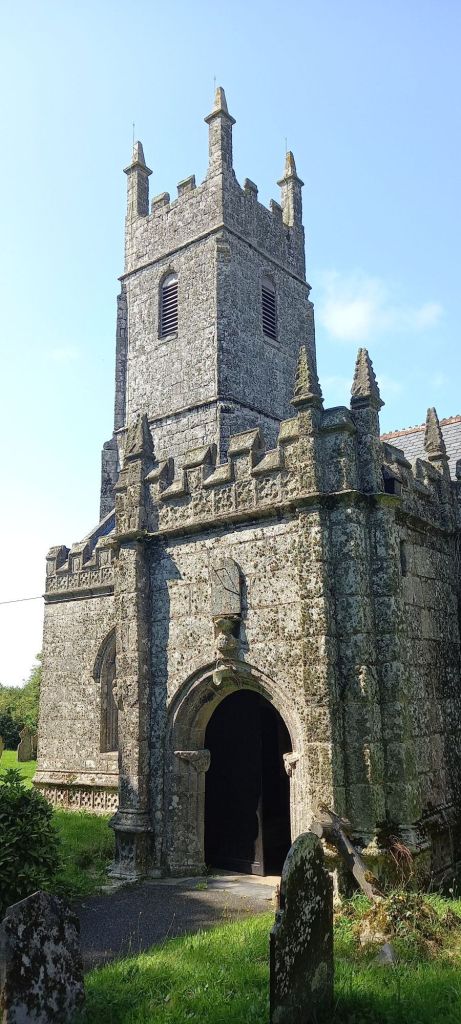
The next day I headed northwest to Dartmoor and visited the famous church of St Pancras in Widecombe-in-the-Moor (Willow in the valley) on route to the next campsite. The fourteenth century church seemed grand for a small moorland village, and I was greeted by a friendly older couple inside and asked where was travelling from. St Pancras as in the station in London was a Roman citizen who was killed for converting to Christianity in the third century ad.
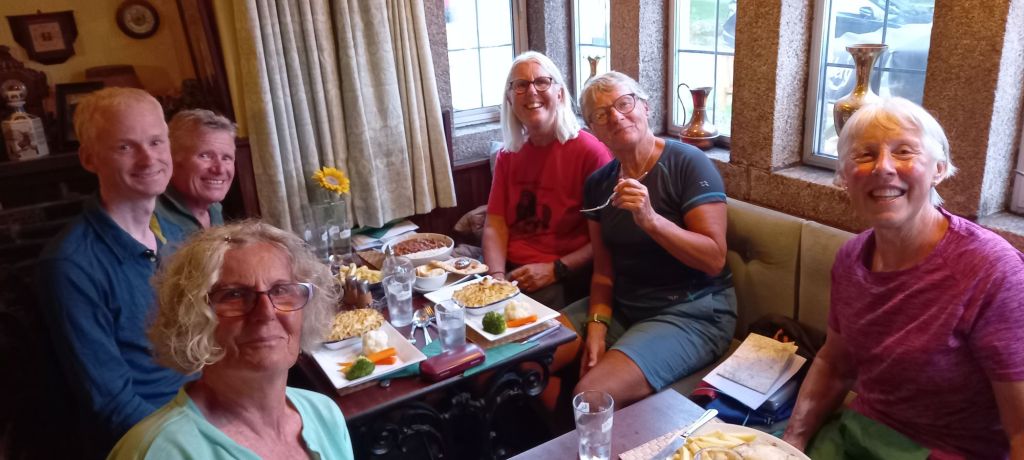
The following day I continued on another long trip over the boarder into Cornwall and through the first of many former tin mining areas, including one named “Minions”. There was a tea shop and postoffice near by with many people sat outside, and the nearby pub was closed boarded up. I took a few photographs with my film camera and continued to eventually arrive at the campsite in Bodmin moor. During the evening I met with a group of older cyclists who had set up camp also. They were a swimming group from Falmouth and undertaking a north south coast cycling trip together. (see photo at pub together below)
The next morning I heard a loud bang, and noticed the front wheel was flat. I was only a few yards from the campsite and was able to replace the innertube with the spare, before heading to the cycle shop in Bodmin for a new brake pad set and check over. Got the all good and off I went on nearly forty miles cycle via Truro, passing a couple Cornish churches for quick a break, to the campsite near Redruth. The countryside in Cornwall reminded me of Wales, being more industrial and a sense of traditional communities in each area.
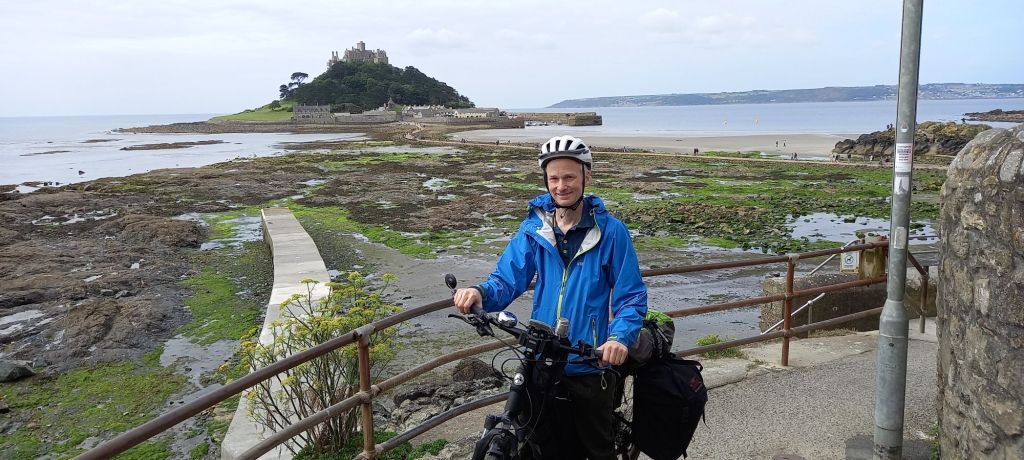
Finally to complete the Celtic way, I arrived St Michael’s Mount on Friday August 2nd. Although the weather had been warm and sunny for most of the week on arrival there were dark clouds looming, a strong wind, not quite what I had expected. Also I was unable to visit the former monastery as the tide was in, and the causeway path would not be accessible until the following day. After setting up camp, I enjoyed an evenings walk along the beach walkway to outskirts of Penzance.


 Mark's Cycling tours