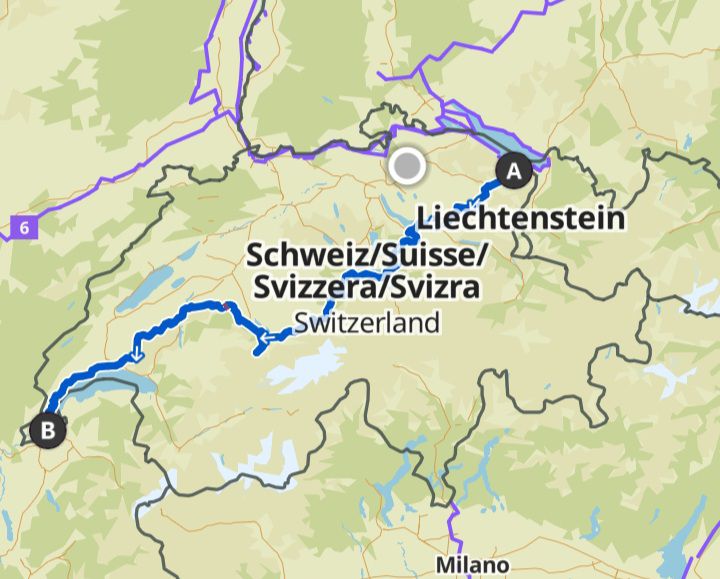
ROUTE 12: Schwyz to Geneva

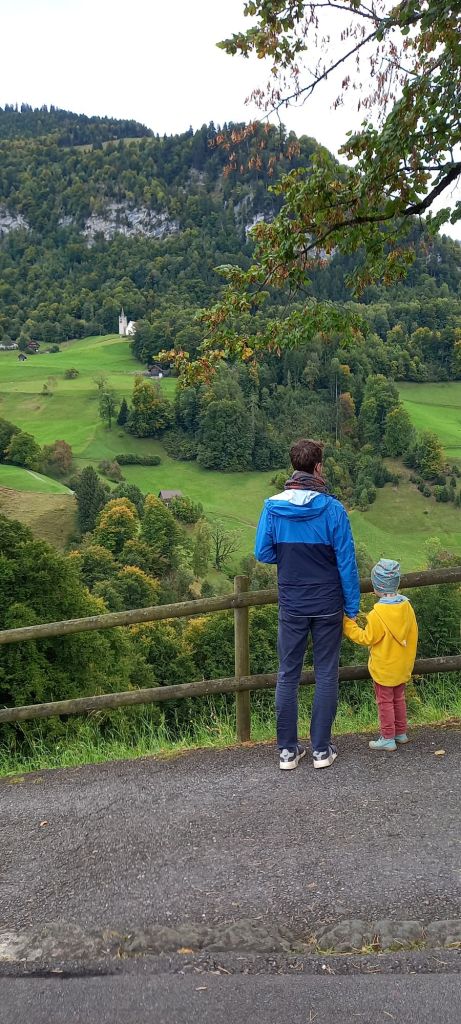
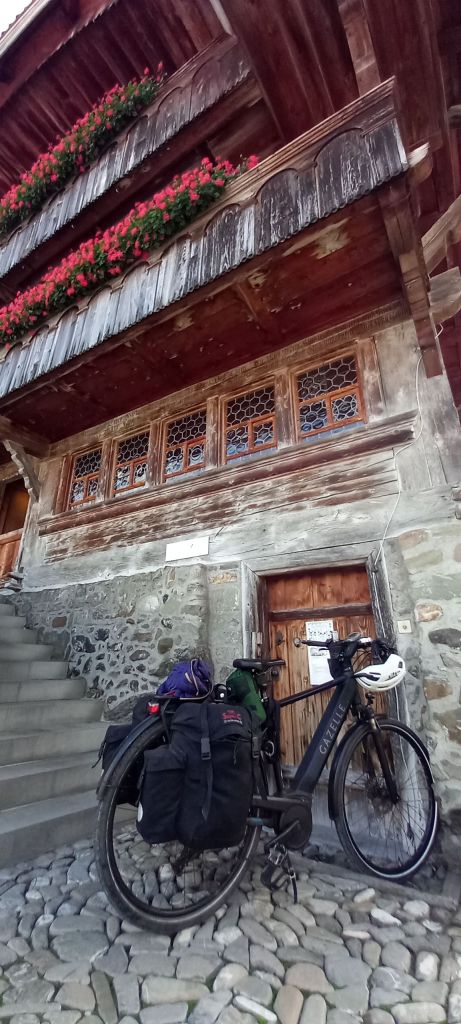
I started the second part quite high up, cycling down from Schwyz to the lake side port of Brunnen. Then taking the boat across from canton Schwyz to Trieb in canton Uri. Cycling up a steep winding road, with great views of lake Luzern, up to Seelisberg and down to lake again near the town of Beckenried for a cheese bread roll and apple lunch.

I noticed every few miles crosses on the roadside and even candles to light a prayer for someone. There seemed to be a love of holy things, saints on the route westwards..

After some miles, I passed under a busy duelcarrageway and then along lake side (Alpnachersee) took a wrong turn and would have enden up on the prohibited main road if was’nt for a car beeping the horn. I turned around and followed an elderly gentleman on his bike, noticing a bike sign above. Then the following day I cycled to the village of Flueli-Ranft, where there’s the hut of brother Klaus, now the patron saint of the country.  He was know to have fasted for twenty years and in 1481 helped prevent a civil war between the Swiss cantons, reminding me of the Hilda and the synod of Witby in the north of England. The way of Saint James (to Compostela, Spain) was also recognised through this area some years earlier.

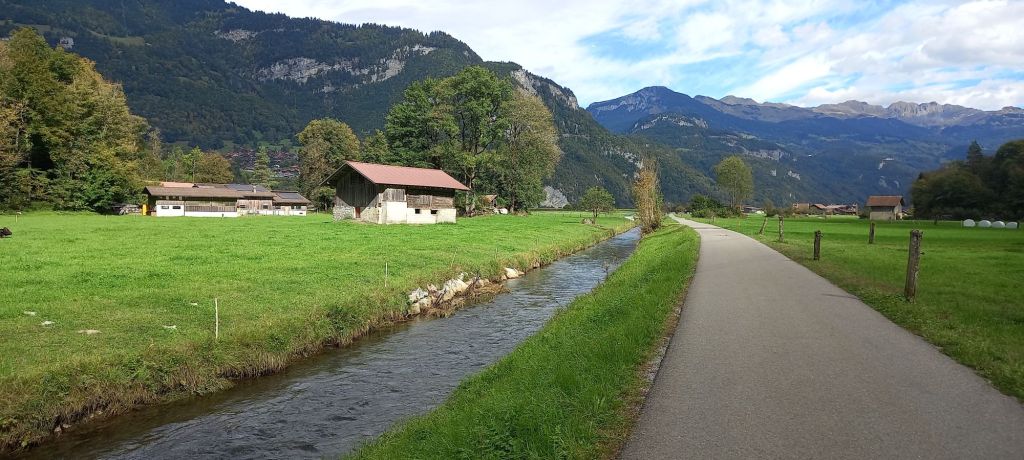
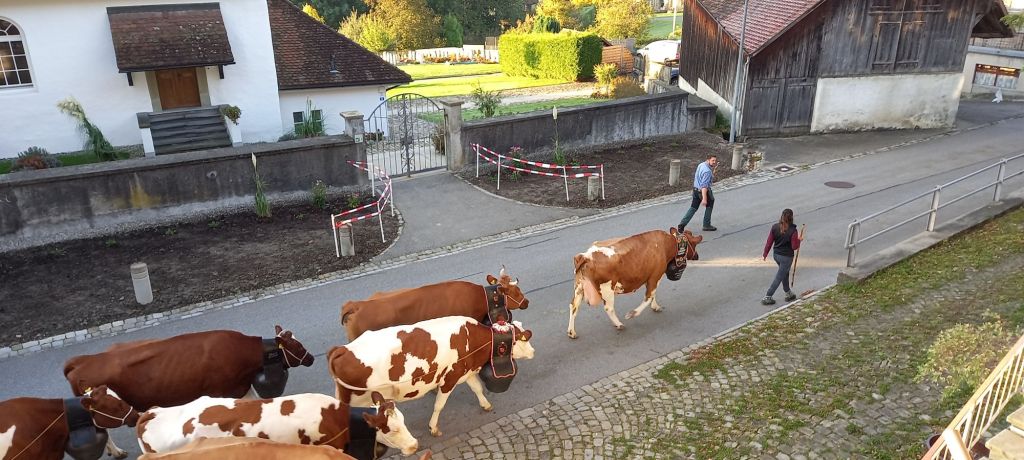
The weather then turned slowly cloudy and I cycled high up heading over the Brunigpass to the next valley. This valley had particularly steep sides and I noticed some farm huts were left to decay among the cows.  I arrived at the Brienz youthhostel and had a late lunch in the back garden area becides the lake. At the hostel I got chatting with a young Swiss lady called Anna who was spending a few days away with her friend.

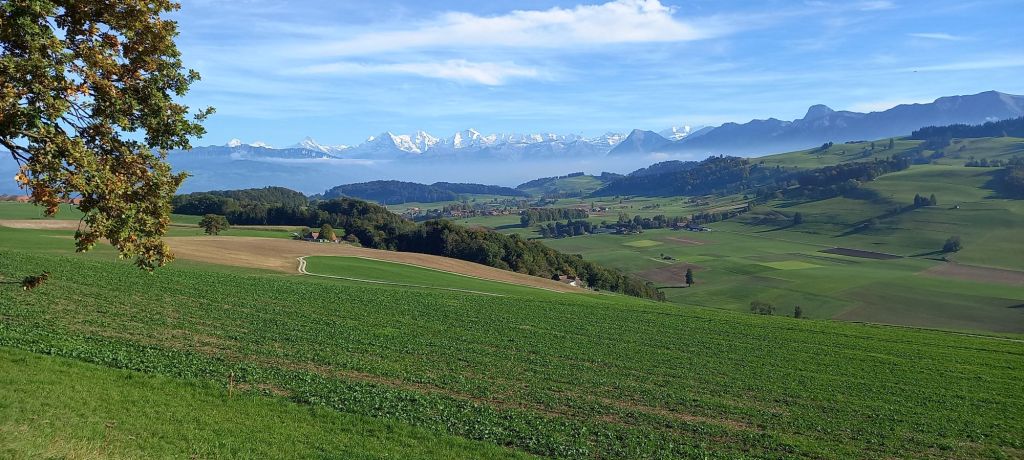
The next day I took a boat across to Iseltwald and cycled through the popular tourist town of Interlaken, with the crouds of people out enjoying the sunshine. Then on to the next lake, the “Thunersee”. After a short break in the village of Frutigen, headed west through  the canton of Bern. The area was mostly small hills and villages, with the smell of freshy cut grass and many signs for paths for paticular uses, I felt abit nervous that some person may shout that bikes are not aloud or similar. By 4pm, I arrived at the bnb in Rueggsberg. A large lady answered the back door and said the house was nearly empty and would give me a upgrade double room. She then showed me to a workshop area (her husbands) and instructed me to park the bike there. The house itself was an old farm building and had furniture to suite and a balcony to look out of. There was the main church next door, reminding you of the time with the common church bell sounds heard through the villages. A short walks distance way was the Rueggsberg priory ruins, formery connected to the Cluny abbey. (France) I sat in the nearby garden looking over to the distant snow mountains, reflection the day.

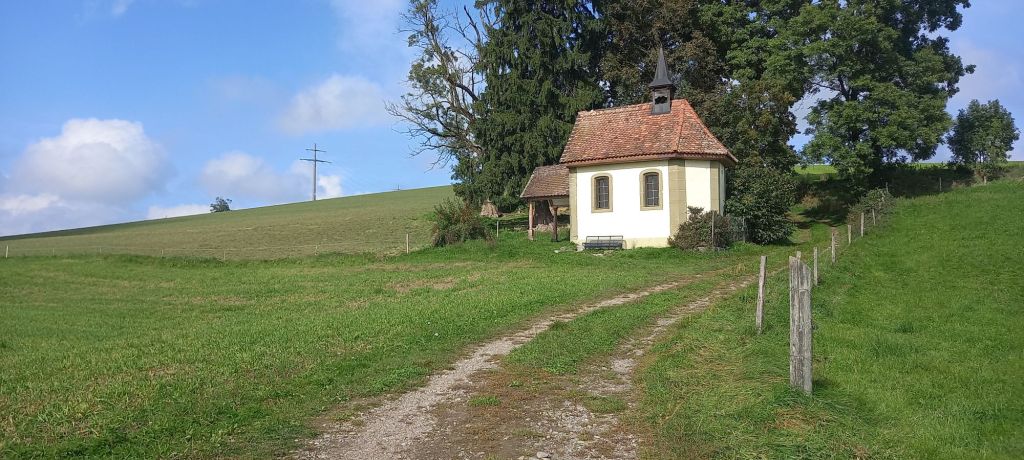
On the Thursday, I cycled further west into the French speaking part, ending at the city Fribourg. On the way, I stopped a couple times: Firstly in Tafers, by chance whilst parking my bicyle was met by a local historian, who kindly showed me around the museum next to the church. (Sensler) Was shown some locally made furniture and how German influence had continued in the mainly french speaking area. Further on, whilst resting at a small chapel, a German lady stopped by and asked me to take her photos. She said said was a Roman Catholic pilgrim from southern Germany and was walking the Way of St James through Switzerland.

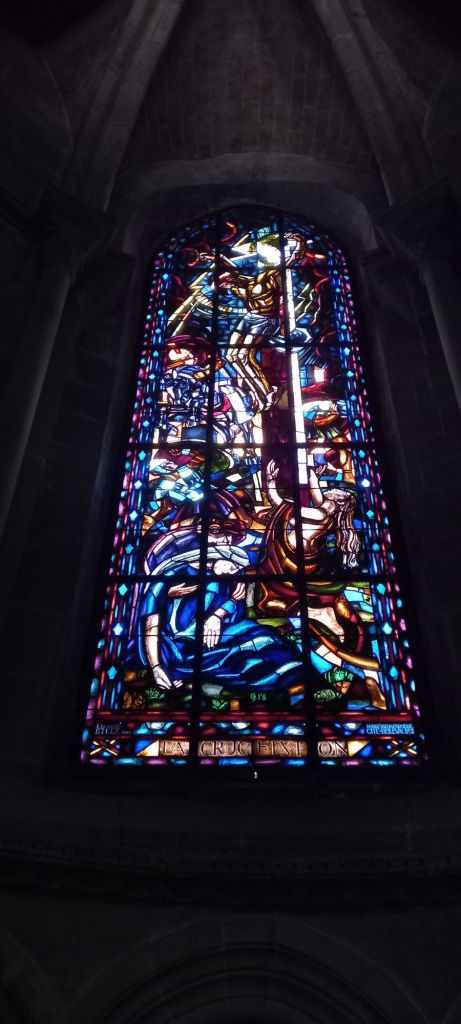
The next day in city of Fribourg I was feeling rather tired as there was loud snoring in the dorm the night before. After a coffee at mid day I had a look at the Cathedral (St Nicholas) and walked around the old town, including the lower part, in the valley bottom. The sun came out by mid afternoon and with the autumn colours, gave the place a new sense of beauty. Then on Saturday, the lovely hill top town of Romont was the next stop. After an hour of arrival there was lots of car drivers beeping their horn and people looking out from cafe windows for the wedding party.

On the Sunday I had a quiet cycle south to Lousanne, on the banks of lake Geneva. It was with a sense of relief that I was nearly at the end of the tour. I went for an evening cycle along the shore, passing by many joggers, families and the Olympic headquarters building, with its interesting modern design.

The next day I took a bus and tram up the steep hill into the old town. Like Fribourg, there was a youthfulness in the air, but the over the top shops with luxuries were abit more obvious here. On the other hand, the cathedral was protestant and although grand in size, without the opulence of some of other places. After a strole down to park “Mon De Repos”, due to the mist and dull weather, deciced to write some post cards at a cafe and return to the hostel.

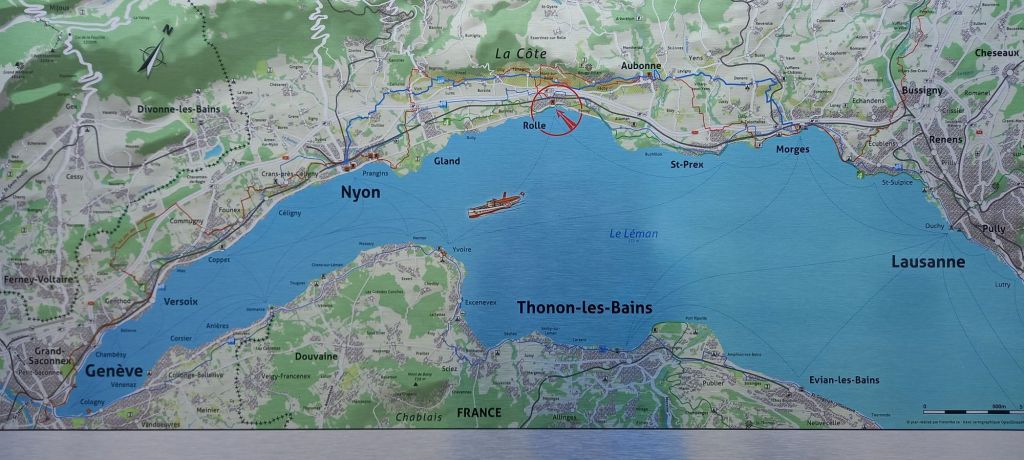
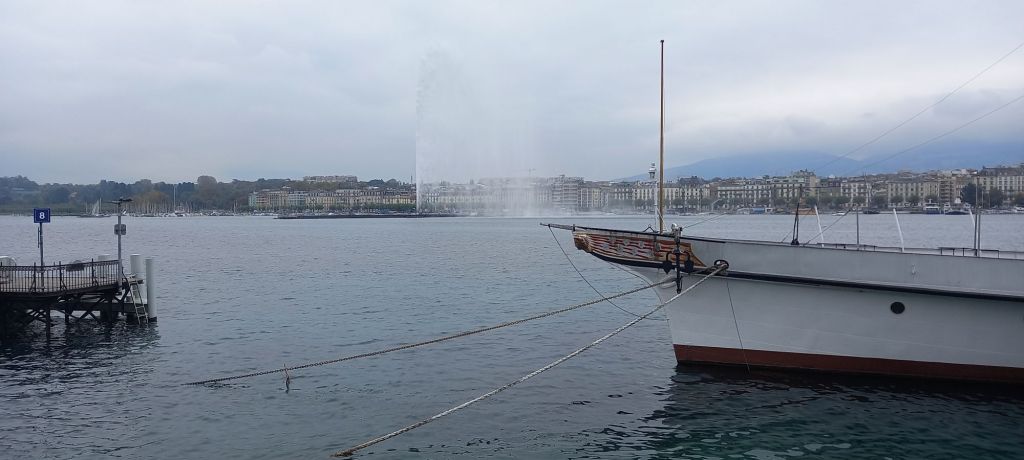
For the final day of travel, I rode along the northern (Swiss) lake shore passing through many vineyards, some with grand old chateau houses, some less so. My hopes of a grand view of the lake in the sunshine with the vineyards in the foreground were dashed, as the autumn mist continued and the vineyards were now in hibernation. I stopped for a coffee break at Rolle, along the main road and took in the busy feel of the place. Arrived in Geneva for approx 4pm and had a late lunch at the park looking over to the Geneva fountain on the other side.

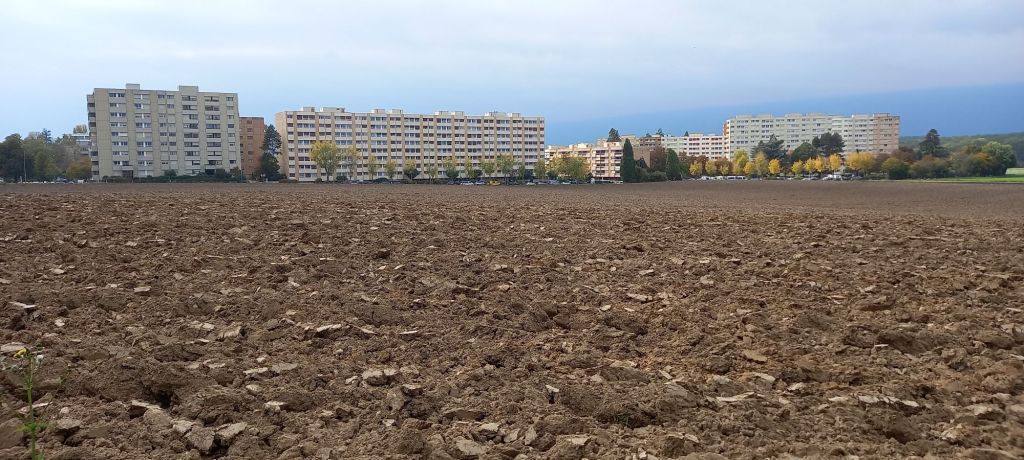
On the final day I cycled to the main cathedral, which took me alittle longer as the roads were very busy and cycle lanes were not all as safe as I had been used to. Also there were many more cycling around and seem to sometimes outpace the traffic! Then walked to the park, had a coffee and wondered around the secondhand market stalls, a short (& crazy) cycle away. I took a photo of one of the sellers with his items and he mentioned his daughter lived in Gasgow. Then I decided to cycle to the near by suburb of Meyrin, where I took some photos of the concrete 1960s community village that I had seen in a book about. It seemed quite well maintained, with good sized parks/flora and many people of different nationalities living around the place.
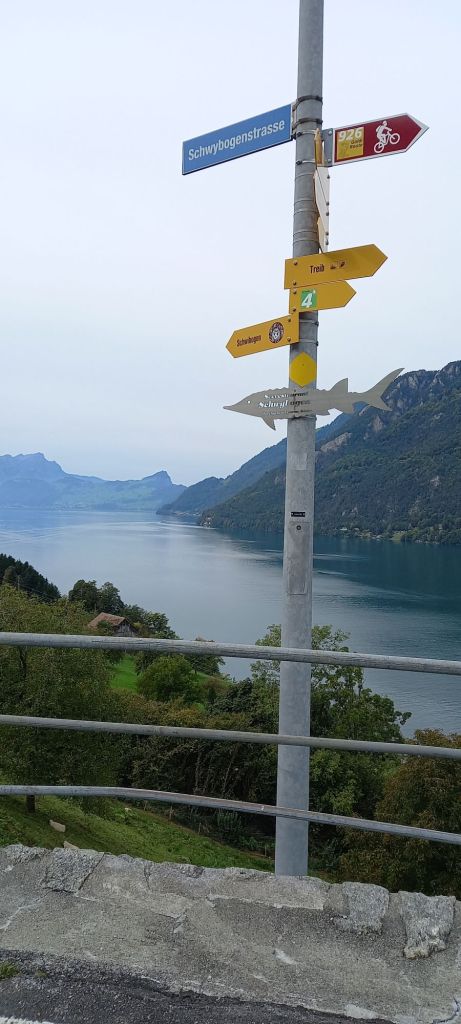
Fribourg
Geneva harbor
Meyrin

Route 11: Rorschach to Schwyz.

This is first part of two routes, following the way of St James, (Jakobsweg) from the banks of lake Constance to Geneva, Switzerland.

I set off on an early Monday afternoon, cycling along the banks of the great lake, stopping to see a couple ships leave the dock at Rorschach. The day was cool but sunny and I felt in a positive frame of mind for the cycle to St Gallen.

Next stop was the Corn Exhange building, now serving as a museum. The building was built in the 18th century and became a major hub for grain merchants in southern Germany. Then I continued up into the hills of Appenzellerland cycling past fields of green pasture some ringing with the sound of cow bells. Then for a further few miles, arriving at the St Gallen hostel for 4pm. The next morning I walked down into the city old quarter and was struck by the abbey, towering above and buildings. I had heard about the St. Gall library next door and went in to explore. Some of the old documents used by the monks  were on display, and art and craftmanship was quite something to see.

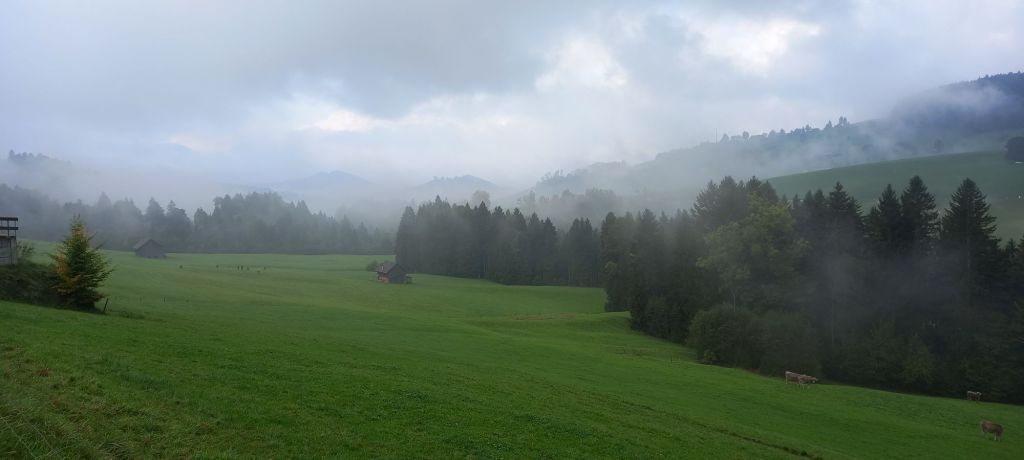
Then I continued through the rolling hills, seeming to get higher the further I traveled. On the Tuesday, the morning was misty with low cloud covering the Appenzellor hills and low mountains. I took a route to a high up village of Hemberg, with the cloud giving way to sunshine on the top. Then decending through villages, including Wattwil and Ulisbach down to lake Obersee. The sun was fully shinning, and light reflecting on the surface made it appear a sparkling greeny blue colour. There was the sound of the train passing by and cyclists appeared out of nowhere, many elderly with ebikes and high viz sports kit on.

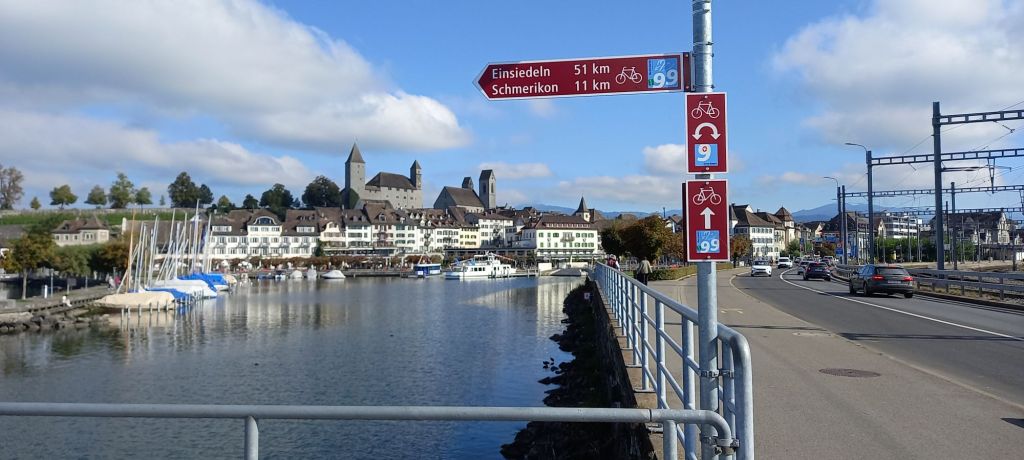
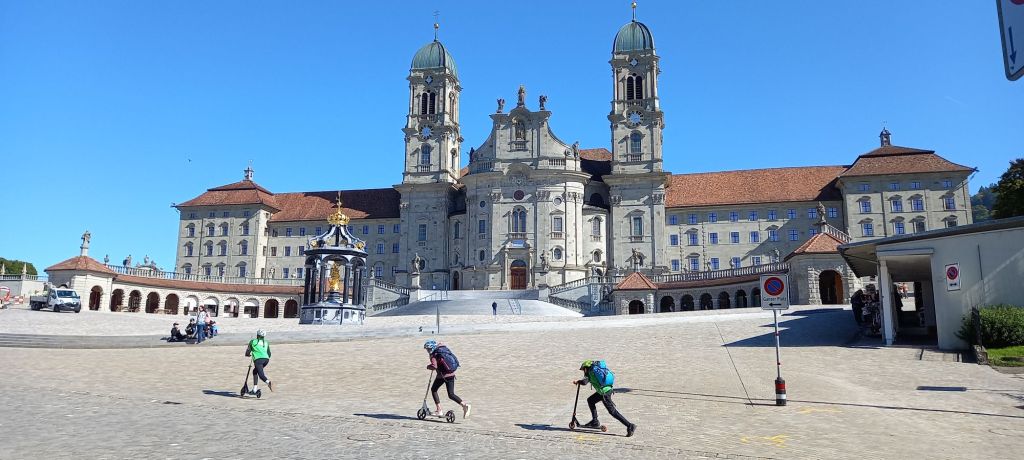
The following day I rode along the lake to Rapperswil, over the road bridge to the otherside, then up into the mountains. Through a tiny village named Egg to the lake, Sihnsee. Over the lake via the road bridge, heading westwards, the impressive abbey of Einsiedeln appeared infront of me. This was on a similar scale to St Gallen, though in a rural setting, and after looking up from the courtyard eating a cone of Italian pistachio icecream and wondered if this was Italy? It continues as a Benedictine order and I noticed a few monks walking about and chatting to tourists. Continuing on for another couple hours, arriving in the alpine town of Schwyz for the overnight stay at the backpacker hostel.

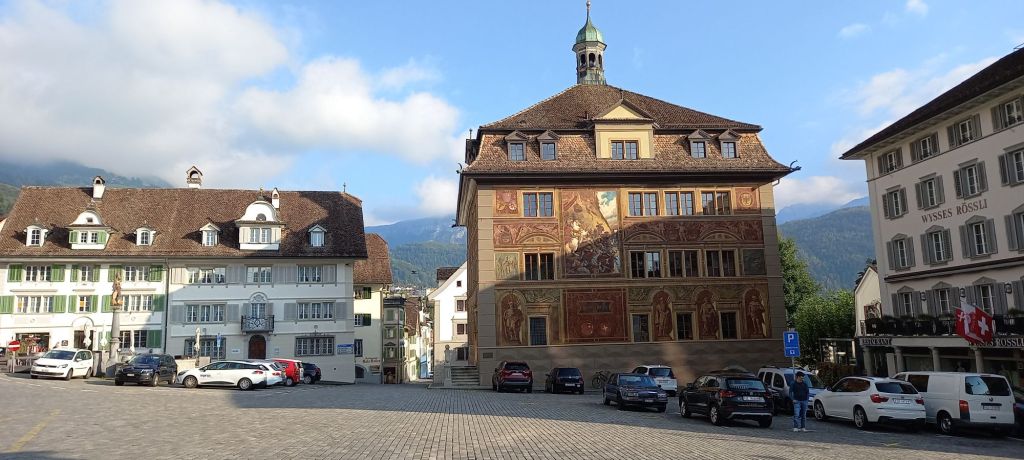
The setting was high up in the Muota valley, with towering mountains from all sides. The town is the capital of the canton (as in county) and has an interesting museum on the history of Switzerland. The formation of Switzerland happened gradually over the centuries after the Roman empire ended. There was a building of small communes and cantons, and due to its location, away from the major European centers, deciding to form the country, mainly of rural communites, with local autonomy. Some murals depicting this are painted on the townhall in the central square.

Schwyz Town Hall
St James Swiss Route.

Route 10: Oban to Iona

To conclude the cycle itinerary, I took my bike on board the ferry to Craignure on the Ise of Mull for the first part of the trip. The weather was wet and breazy and I wondered what to expect on the 30 mile ride after docking. It was Maundy Thursday and the ride took me out into a wilderness mountainous area, with numerous campervans and cars passing through. At one point I wondered if I had taken a wrong turn and my fingers began to become red and toes numb. It reminded me of the account of Jesus in the wilderness and how its often the unknown that has to be overcome to see the bigger picture.

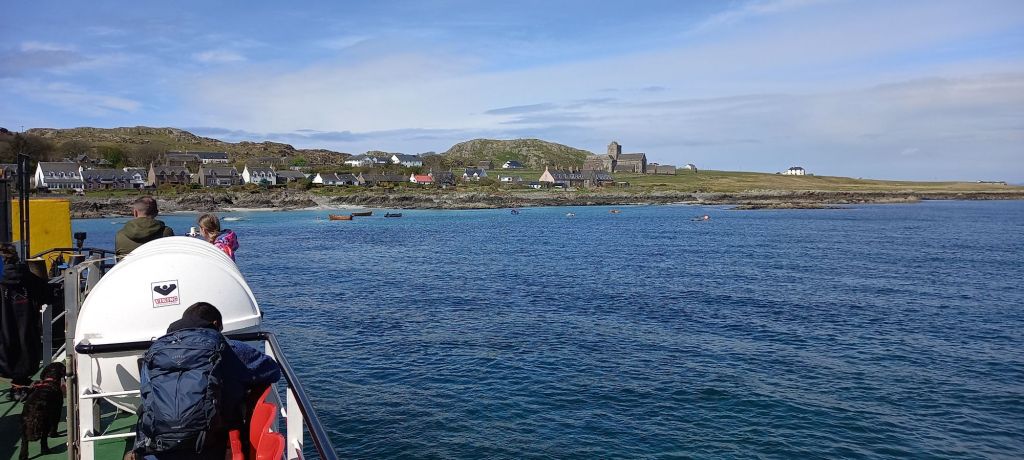
Then the terrain changed to lower elevation and a loch (Scridain) appearing on the side of the road. A lone cyclist went by with a nice smile and by 11:30 the weather became dryer and warmer. I went through the small fishing village of Bunessan and then the sun came out and changed the atmosphere completely. The sea turned from a murky green, to blues and greens and more sea gulls could be heard. On arrival a Fionphort I got on the ferry without delay and the short expanse of water and clear view gave me an opportunity to take some pictures of the abbey in the distance. (See photo)

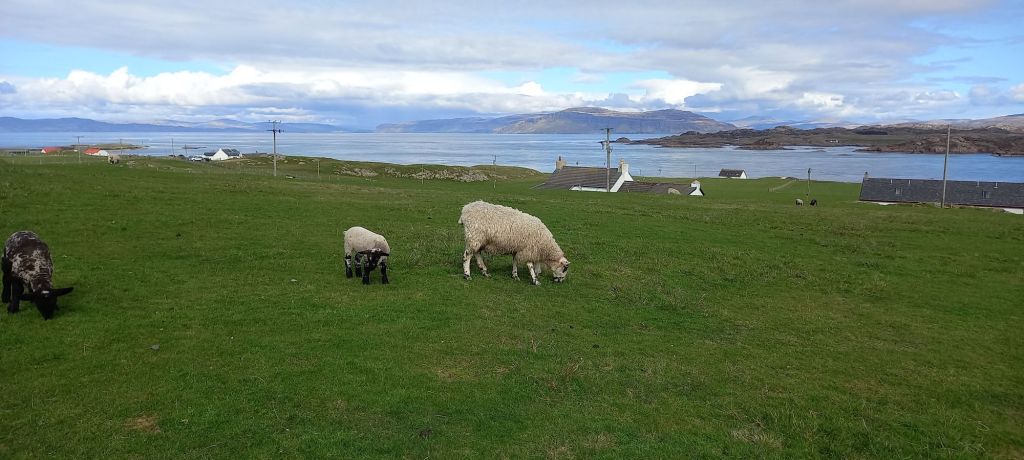
The Easter weekend was now appoaching and as a Christian, the island with its bleakness and beauty seemed appropriate to end the trip. There were sheep and lambs around the farmers fields and abbey had a poster with service details for visitors to join in if they wished to. At the Church run guest house, the visiting vicar (Rev Rod Geddis) lead services including one on Good Friday afternoon compiled as a play, him being of a ruff centurian dealing with this Jesus person walking to cross etc. The other guests were mostly of retired age and lovely to chat with. Also three guests from Brussels (Belgum) whom I joined on a walk to a near by hill top view point. On Sunday I went along to the Abbey service and enjoyed the music sung in their Iona acapella style.

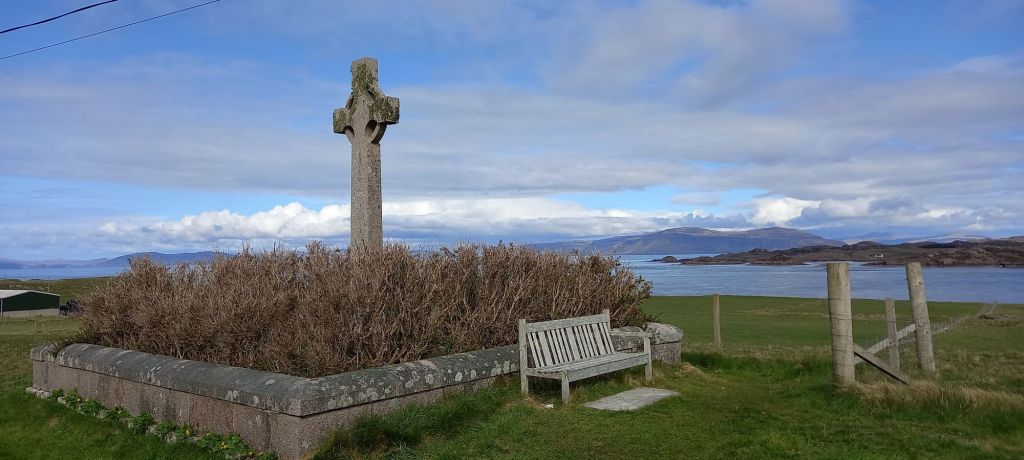
The Island has been a leaving or destination place of pilgrimage for centuries and after the arrival of the Irish monk Columba in 563, became a centre of Celtic Christianity.

It was an amazing feeling to be here and with the sky and views around, felt quite heavenly.

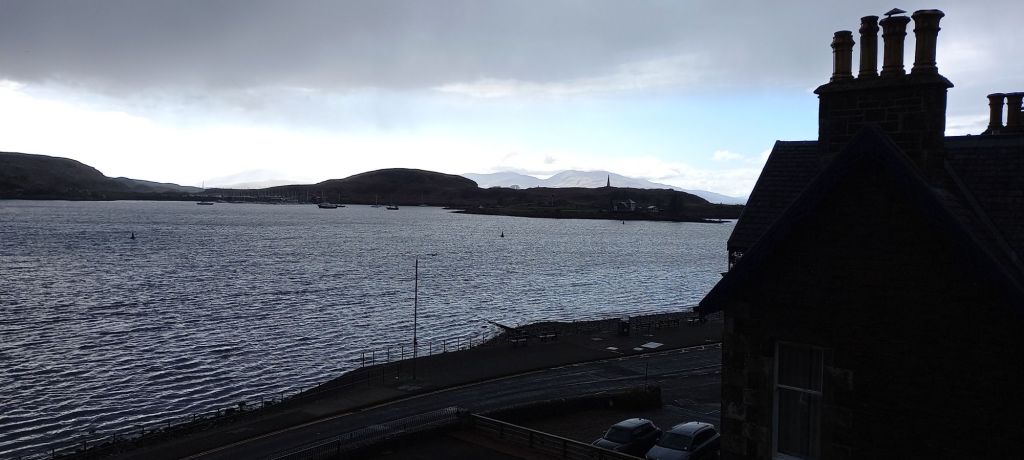
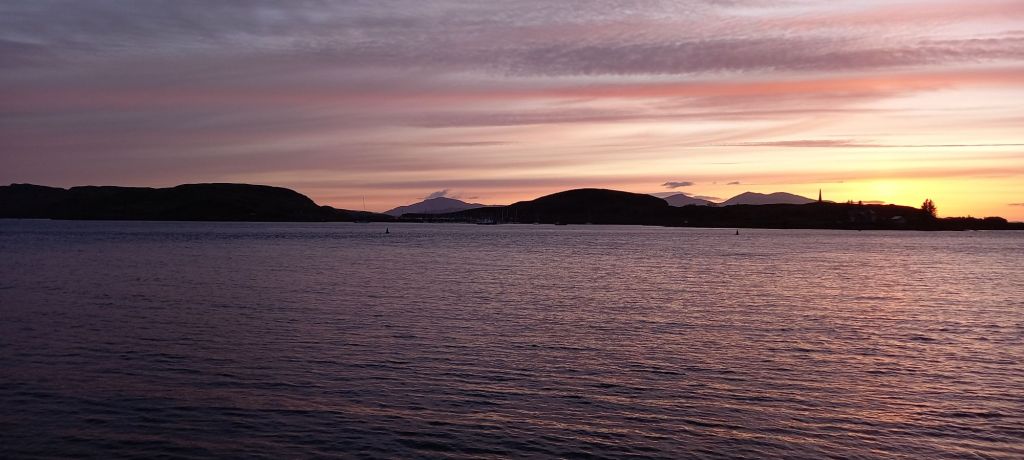
Oban bay area
Ferry to Iona

Route 9: Dundee to Oban

The second part of the cycle trip took me west along the Tay estury, and with the weather turning sunny and milder, gave me a positive outlook for the week ahead.

After turning alittle northwards I arrived at Perth and was supprised that the campsite had a sign: “closed for the winter!” I asked if I could stay in a corner for the night and was told the site had been allocated to some travelers until July. I then went to a nearby Christian retreat centre and they said they only take room bookings. In the end another campsite was found next to a racecourse, and although very clean and modern, I felt alittle out of place with the many families and older couples in thier motor homes and caravans.

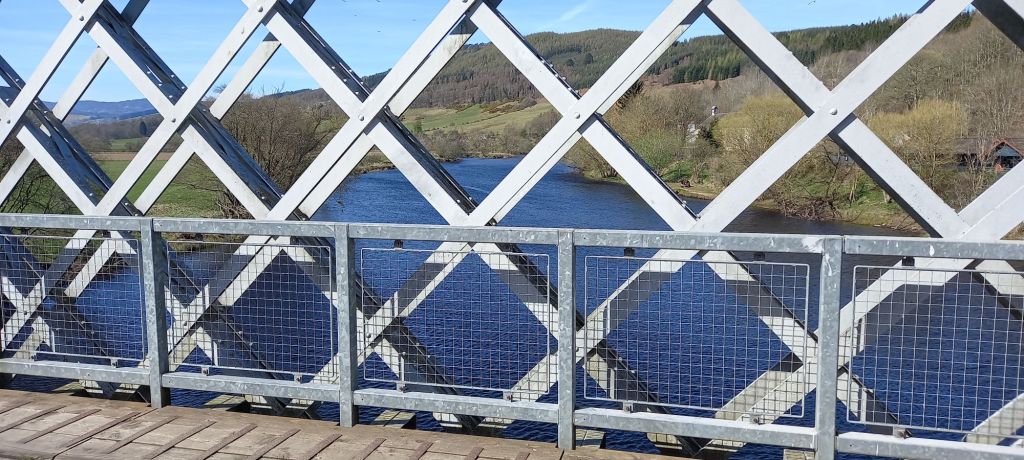
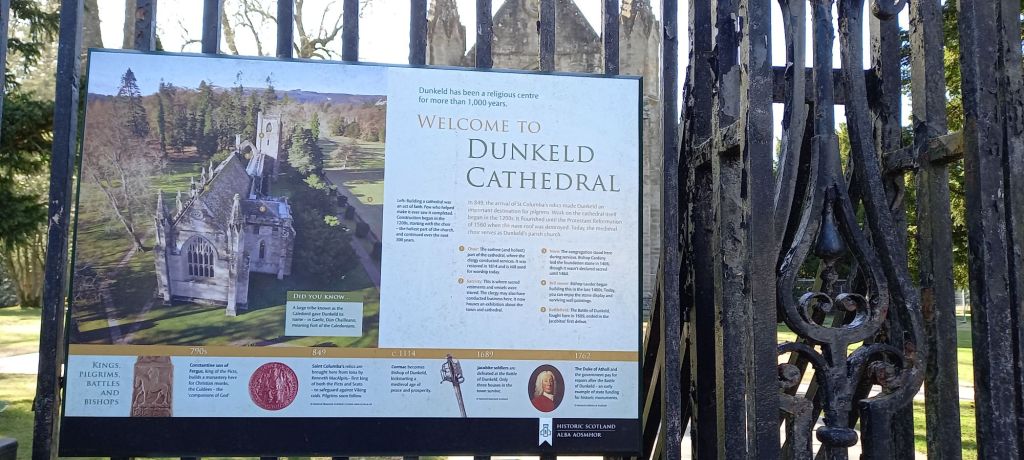
I then traveled northwards along the river Tay arriving at the valley town of Dunkeld. The old bridge welcomed me to a street of people talking happily in the warm sunshine. On the left was the cathedral, partly in ruins, with some grand trees and well mown lawns surrounding it. In fact St Columba’s relics were brought here to keep them safe and since then has attracted pilgrims to the place.
The next day I continued up the wooded valley (Tay forest park area) which opened out to area of fields for crop farming mainly. There was an old viaduct which had a large sign that read “Community owned” at the front. It was a single track construction, built in 1865 and was saved from possible decay in recent years. (Logierait Viaduct) Then the following day continued along the river heading more westwards to the town of Kenmore and Loch Tay. I was quite taken aback by the grandness of the place and cycling along the quieter road marked for cyclists reminded me of Swiss alpine lake setting. The hills had now turned to mountains of the central highlands and there was a more colder chill in the air. Then next morning I looked out of my tent to a frosty field with the sun line slowly move towards me. There was something there that made God seem bigger and closer than I had expected.

From there I rode to Crianlarich, and on the next morning rode to nearest church for the psalm Sunday service. There was a friendly welcome and I was given a psalm cross and a cup of tea at the end. There were lots of questions about where I had come from and going to, and it seemed funny listening to the story of Jesus on the donkey? Then from there I headed along the river Orchy, as suggested by a member to the village of Dalmally. This was the berth place of former labour leader John Smith and apart from the busy A85 road running through, seemed very quite and non touristy.

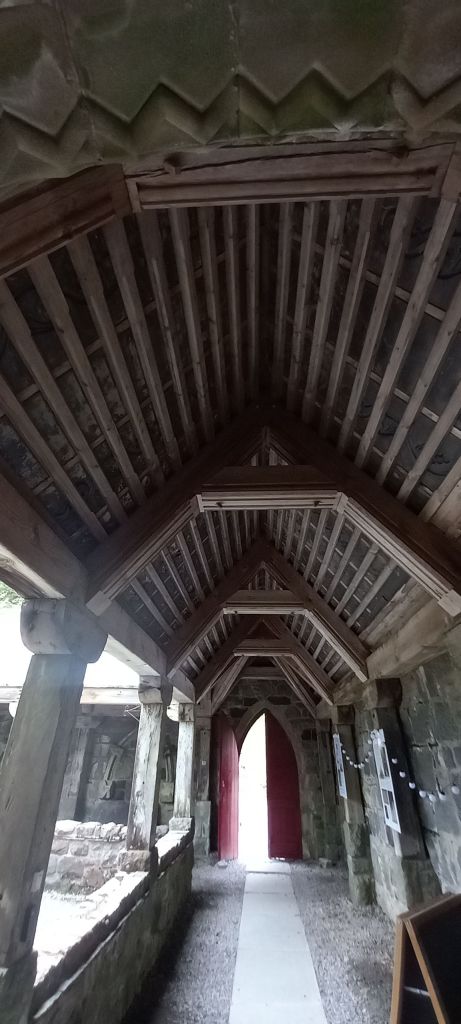
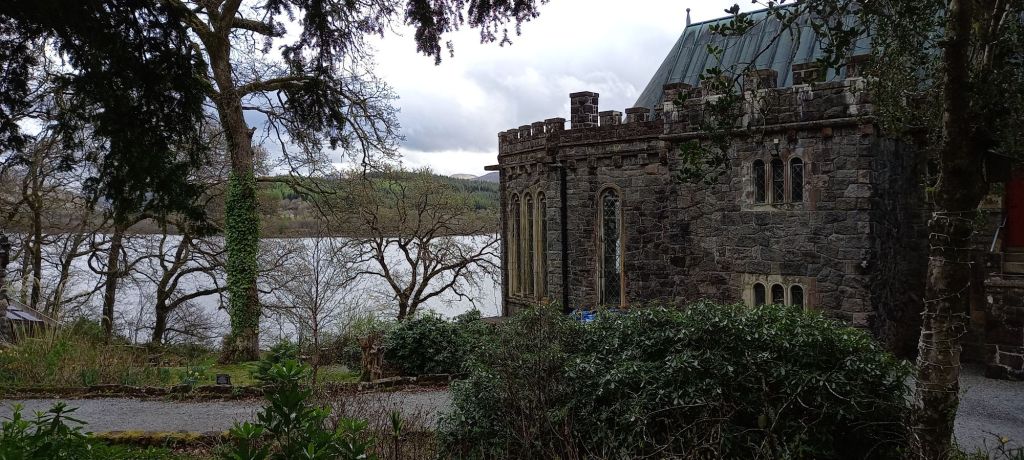
To conclude this section, I continued westwards along Loch Awe, stopping by an unusual building on the roadside: “St Conan’s Kirk”. It is infact a church that was built in grand Victorian style, after the first train line and near by station had been setup. They wanted something less conventional and included cloisters with timbers from a war ship, that looked quite rustic and vines molded into the lead roof. Then continuing a few miles past the loch, I took a quiet road from Taynuilt through farms dotted with sheep and highland cattle ending at the hustle and bustle of Oban by 3pm.

Oban

Route 8: St Andrews to Dundee.

This is the first part of three routes, following the way of St Colomba, from St Andrews to his original setting off point, on the island of Iona.

I arrived at the coastal town of St Andrews on a cloudy, cool April morning. Went past the shops and cafes to the sea front where I was to begin the cycle pilgrimage.

The town has been linked to the Saint, since the early years of Christianity in Scotland. The cathedral ruines were quite large and extensive and as I understand was the most important cathedral up until the reformation. (1517 – 1648) I wondered about him as a fisherman during the time of Jesus’ earthly ministry, being off on an adventure. Looking up at the soring seagulls and grand towers, I reflected on the images of nature and man’s creation to honour the saintly. Perhaps there will be a renewed interest in the grand ideas of the past?

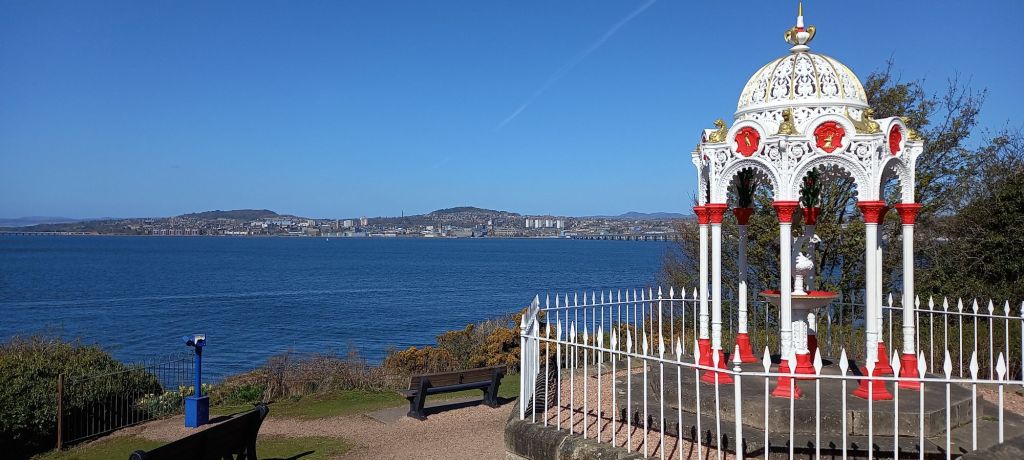
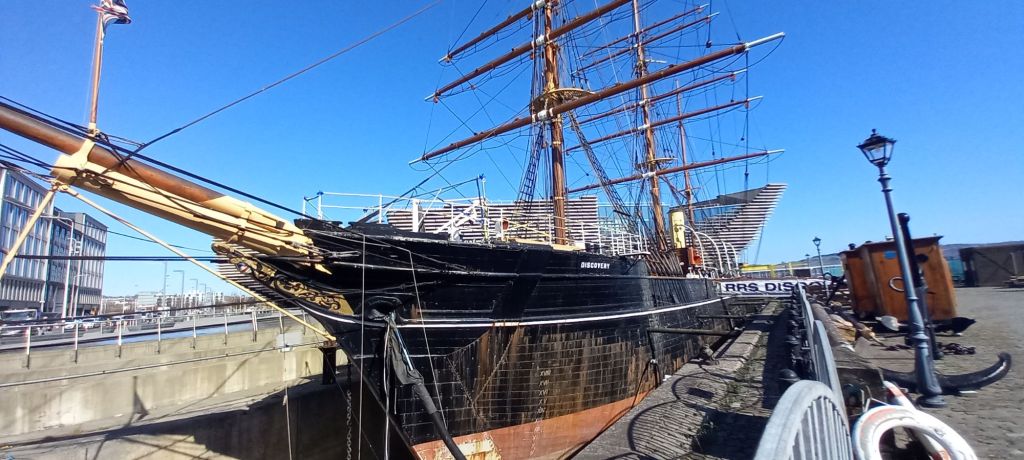
The next day I cycled northwards over the Tay Estuary road bridge to Dundee, where I would complete the first route. Being in the area sheltered from the elements, the town had grown to be a ship building centre, including the RRS Discovery and Terra Nova. They took explorers such as Scott and Sheckleton to Antarctica and continued building wooden hull ships long after iron had most superceded them.

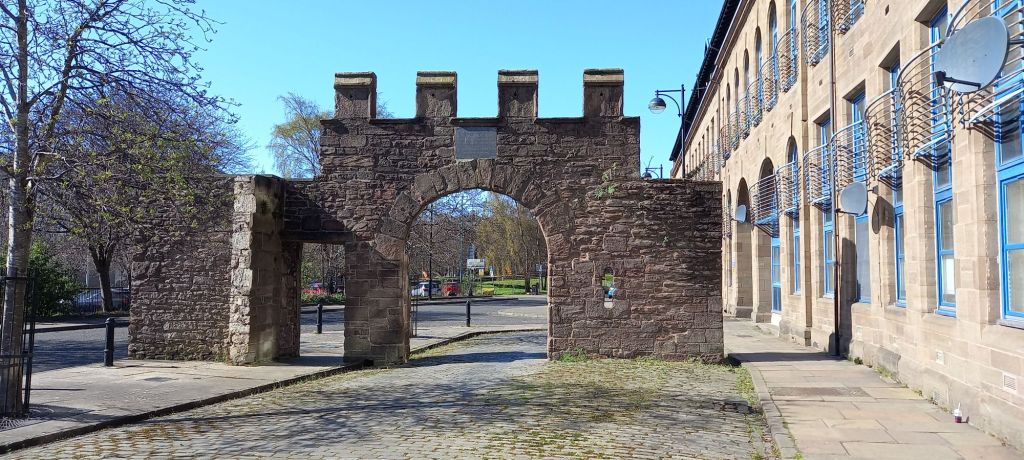
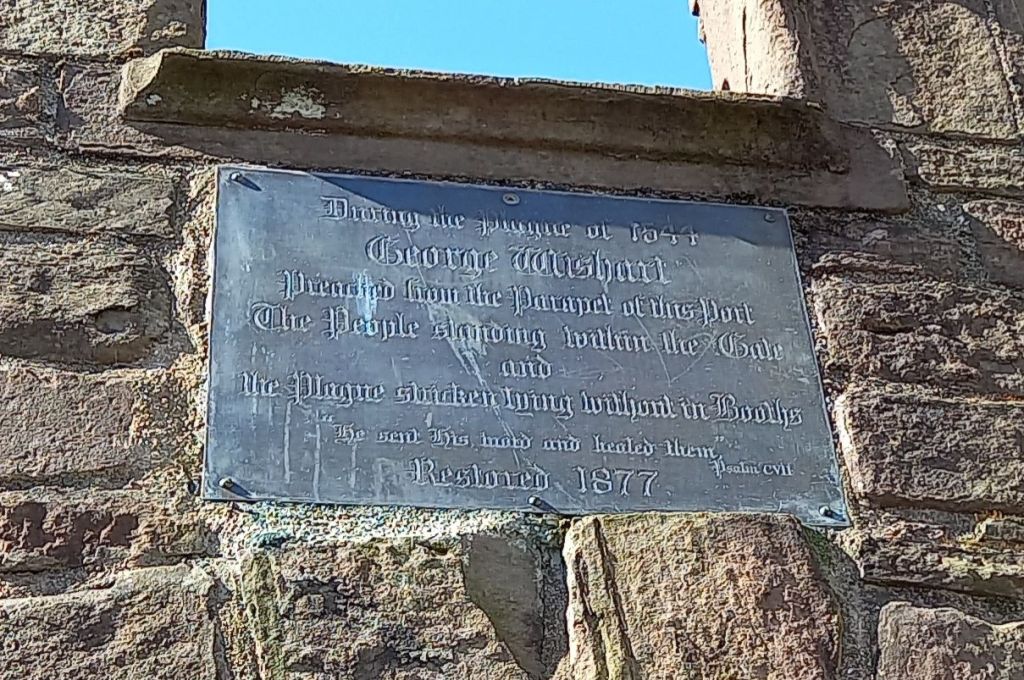
A couple of figures that I found interesting were: 1. George Wisart: (1513 – 1546) he was an early preacher and minister who stayed on during the plague, when many fled. I felt abit sorry that the arch in his memory was sorrounded by modern concrete offices, built in recent years.  2. Mary Slessor: (1848 – 1915) She was from a poor background, inspired by exporers such a David Livingstone, became a missionary to Calabar in South-East Nigeria. She lived in a frugal way and helped set up small schools, churches and outposts in that region.

Route 7: Glastonbury – St Michael’s Mount

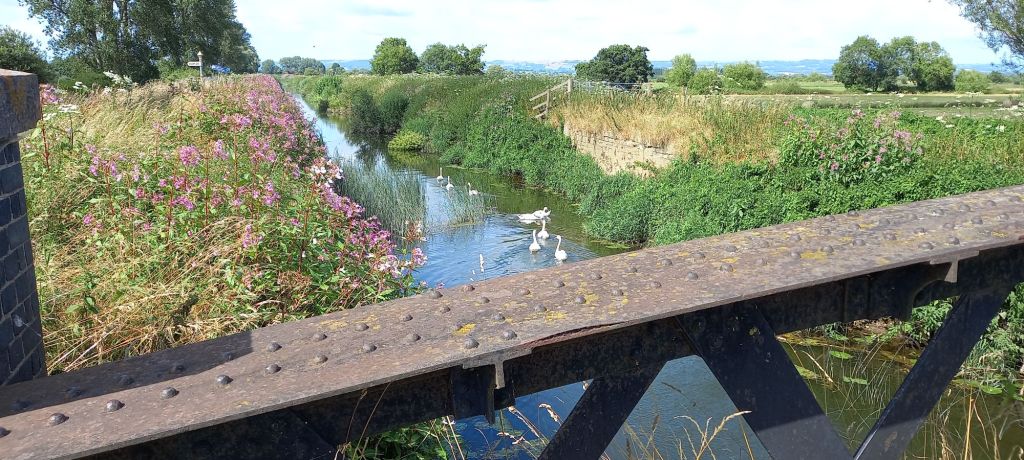
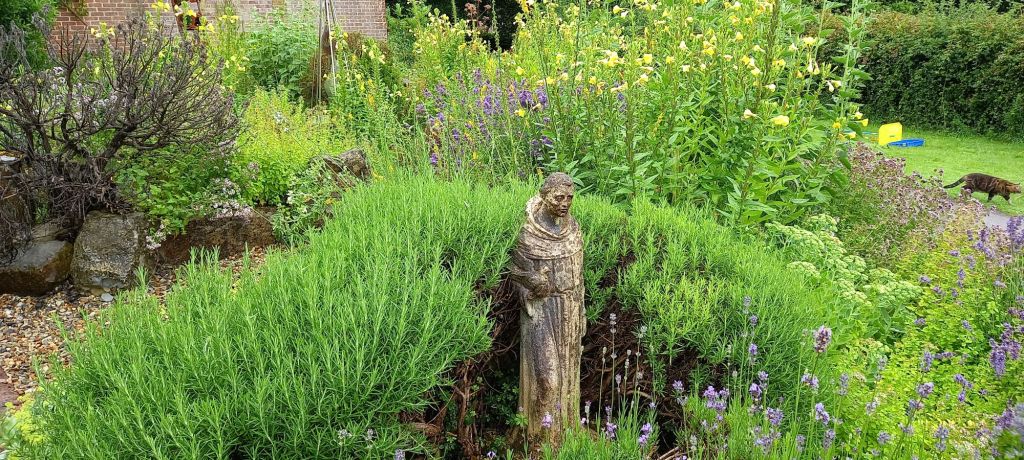
For the final part of the Celtic way, I cycled south of Glastonbury through an area of marshes and canals. I noticed some areas with massive piles of peat and some of the trucks and diggers were busily covering some of the marsh areas with a layer of it. At the campsite I enquired about this and was told that they were rewilding the area for nature conservation. From Somerset, I travelled further south to Dorset and arrived at the community of Hillfield Friary on July 24th. I was given a friendly welcome and shown to my room and a place to store my bike. I stayed for a full day a second night as a way to rest and reflect on the trip so far. The weather during the next day turned out quite rainy with fog and low cloud in the morning. The chapel services were led by the monks and included their traditional way (Franciscan) to sing the Psalms and other biblical words. There was also a time to sing hymns and pray for situations in the world and people in need. The meals were quite simple but tasty and home made bread was provided for the tea breaks and breakfast. I had a chat with quite a few who were there and not all were practicing Christians.

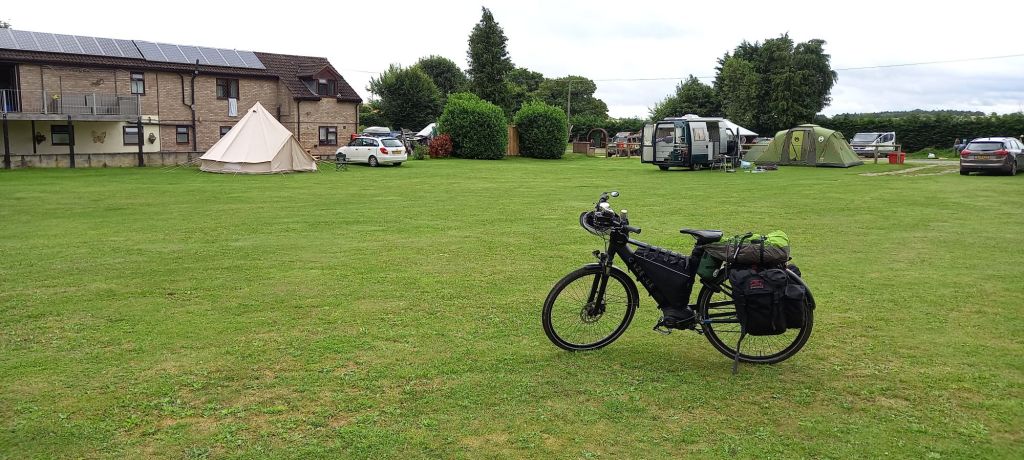
On the Friday I set off on a long ride, firstly to Dorchester, then Martinstown and a number of old hamlets and villages in southwest Dorset. I then crossed over into Devon and found the atmosphere seemed more cycle friendly as the route took me along the coast to Exmouth. There was a short ferry ride at the far end of the estuary and after a long day of around 50 miles, arrived at a chicken farm above the seaside town of Teignmouth. The campsite was quite basic amongst the apple orchard trees and besides the chicken coupes on one side.

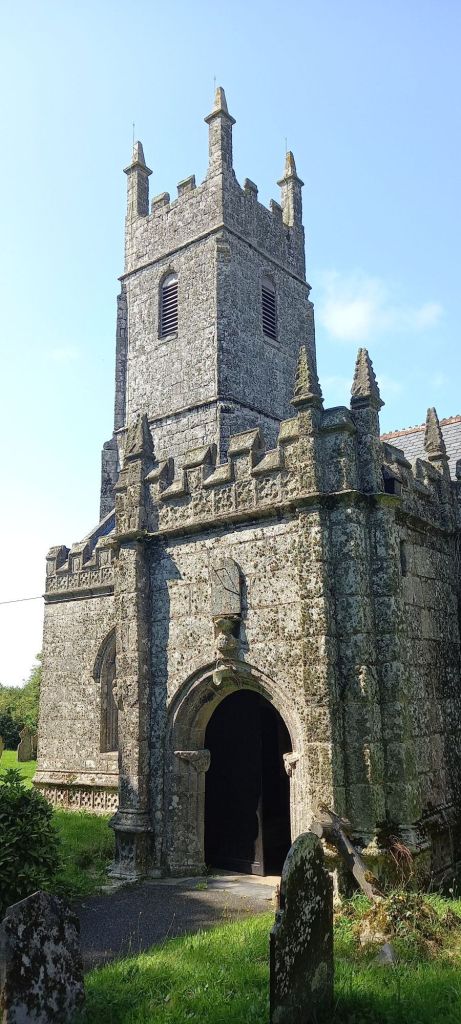
The next day I headed northwest to Dartmoor and visited the famous church of St Pancras in Widecombe-in-the-Moor (Willow in the valley) on route to the next campsite. The fourteenth century church seemed grand for a small moorland village, and I was greeted by a friendly older couple inside and asked where was travelling from. St Pancras as in the station in London was a Roman citizen who was killed for converting to Christianity in the third century ad.

The following day I continued on another long trip over the boarder into Cornwall and through the first of many former tin mining areas, including one named “Minions”. There was a tea shop and postoffice near by with many people sat outside, and the nearby pub was closed boarded up. I took a few photographs with my film camera and continued to eventually arrive at the campsite in Bodmin moor. During the evening I met with a group of older cyclists who had set up camp also. They were a swimming group from Falmouth and undertaking a north south coast cycling trip together. (see photo at pub together below)

The next morning I heard a loud bang, and noticed the front wheel was flat. I was only a few yards from the campsite and was able to replace the innertube with the spare, before heading to the cycle shop in Bodmin for a new brake pad set and check over. Got the all good and off I went on nearly forty miles cycle via Truro, passing a couple Cornish churches for quick a break, to the campsite near Redruth. The countryside in Cornwall reminded me of Wales, being more industrial and a sense of traditional communities in each area.

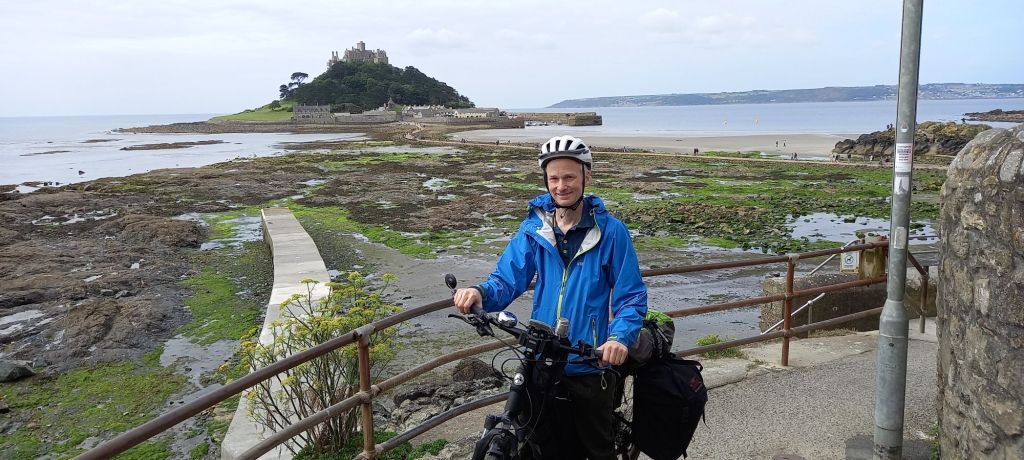
Finally to complete the Celtic way, I arrived St Michael’s Mount on Friday August 2nd. Although the weather had been warm and sunny for most of the week on arrival there were dark clouds looming, a strong wind, not quite what I had expected. Also I was unable to visit the former monastery as the tide was in, and the causeway path would not be accessible until the following day. After setting up camp, I enjoyed an evenings walk along the beach walkway to outskirts of Penzance.

Canal at marshes, south of Glastonbury
St Pancras at Wide-Combe-In- The-Moor
Dartmoor ponies

Route 6: Chepstow – Glastonbury

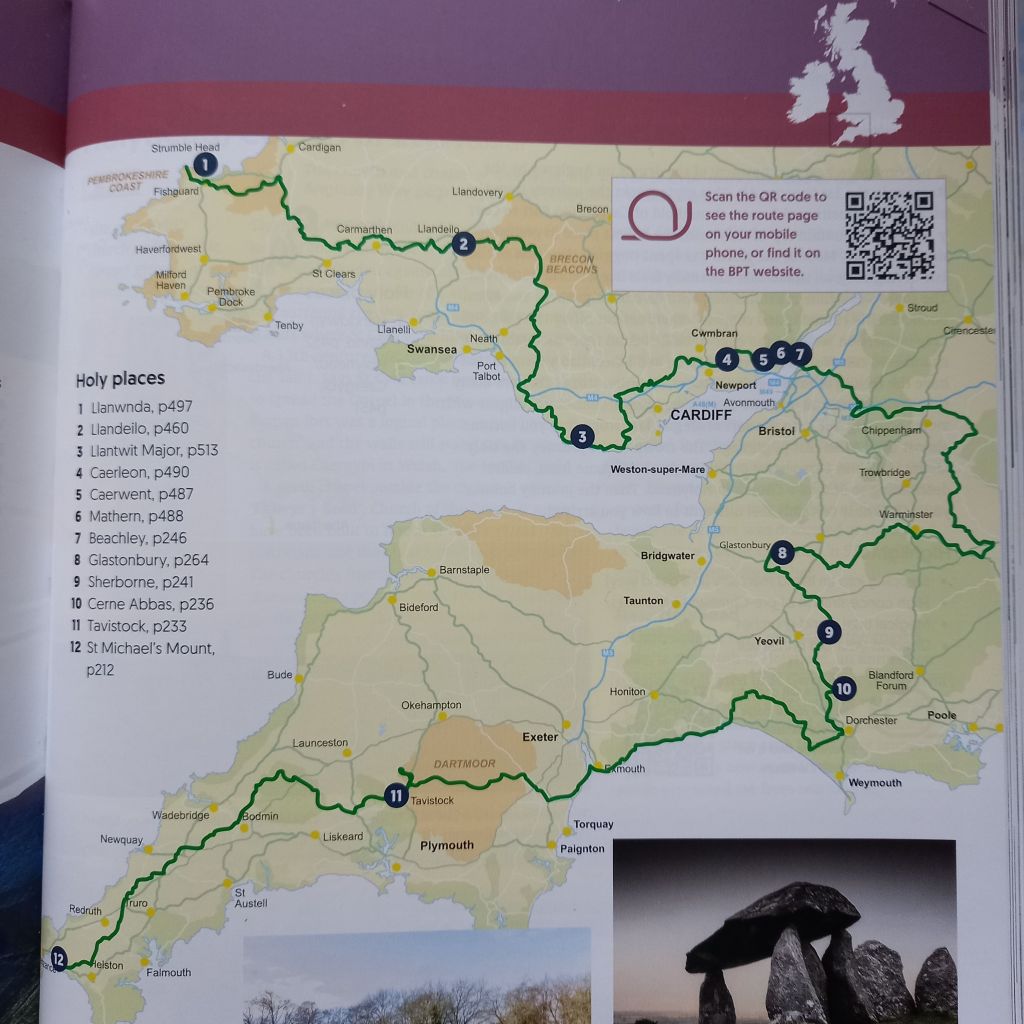
For the second part on the Celtic way, (see photo of map) the route took me over the river Severn, passing over the Severn bridge to the first campsite, north of Bristol. The spot was in a farmer’s woodland, a happy relief from the sun, as the rain had cleared up the previous day. Even so, I had to continue west near the M4 motorway, and therefore wished I had some ear plugs for this and the next campsite.

Then through Devizes, through Salibury plain to the next campsite, at the village of Tileshead. I found this a busier campsite with many campers from Holland, and a group of ladies with Masda Bongo vans. I chatted to some of them during washing up time, and learned they were a south west group and brought their small dogs also. The next day was Sunday 21st and I attended near by C of E church in Shrewton village. I met a friendy lady with crutches, dressed in orangy purple choir dress at the lower entrance walk. After asking for a place for the bike, she  seemed to know a couple of suitable places straight away. After the morning communion service, I chatted to a few people over coffee and biscuits. They were interested to know more about me and I spoke to one gentleman who mentioned he was part of a local brass band and had played along side the Blackdyke mills band.

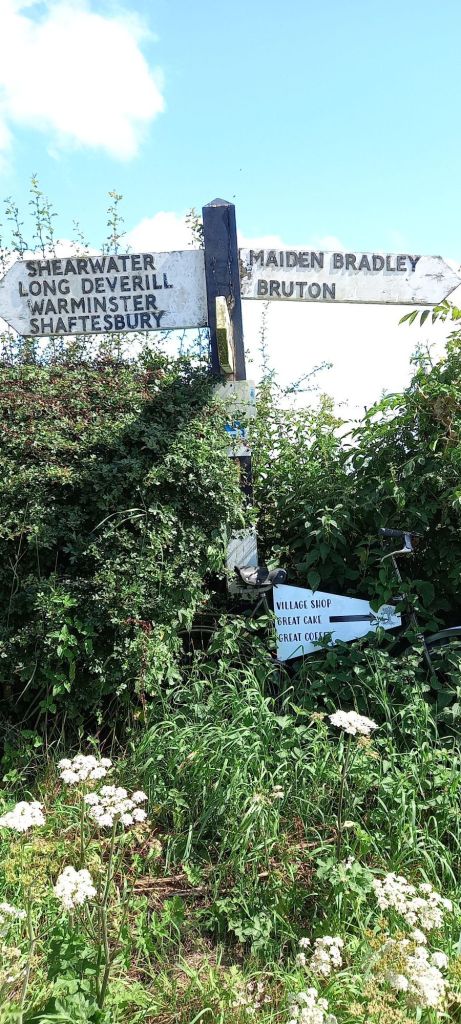
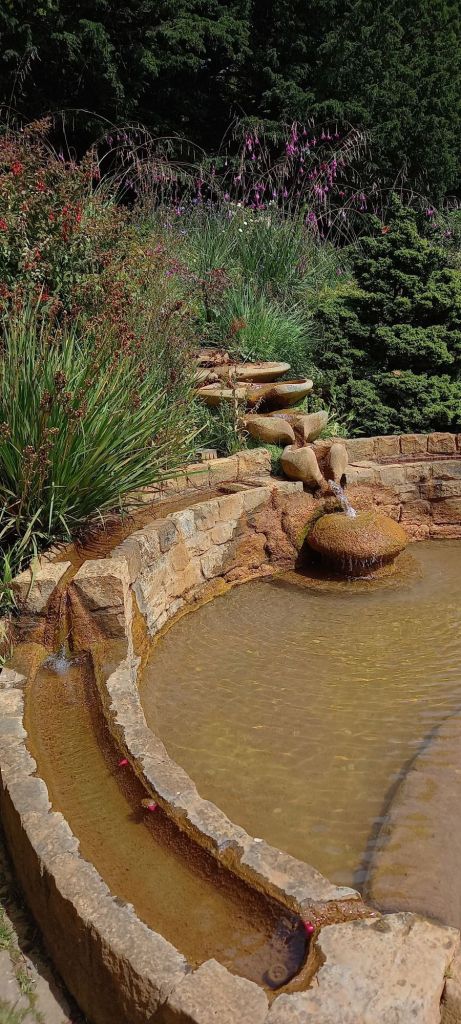
The following day I cycled past Stoneheng, stayed at a pub bnb and then on a lovely cycle route, (national cycle route no.24) poping into churchs at Boyton and at Bruton. I was recomended by a local lady artist to visit the main art gallery in Bruton but decided to return when I had more time to see such things. Then to complete the route, I visitied the Chalice Well spring at the base of Gastonbury tor. This was lovely, partly due to the warm sunny weather, also there were many people of all ages soaking in the prayerfull experience of the place.

The route map
Angel seat, Glastonbury
The Vesica Pool, Glastonbury

Route 5: Fishguard – Chepstow.

To further my interest in places of Celtic Christian origin, I was drawn to southern Wales and southwest England. The route would be the longest so far, hopefully on completion at St Michael’s Mount, Cornwall.

For this first part of the Celtic way, I began at Fishguard, looking out over the Irish sea, and a popular ferry port. The weather was mixed, with rain and fresh breezes blowing over from the west. I found a good veiw point by the youth hostel, see photo.

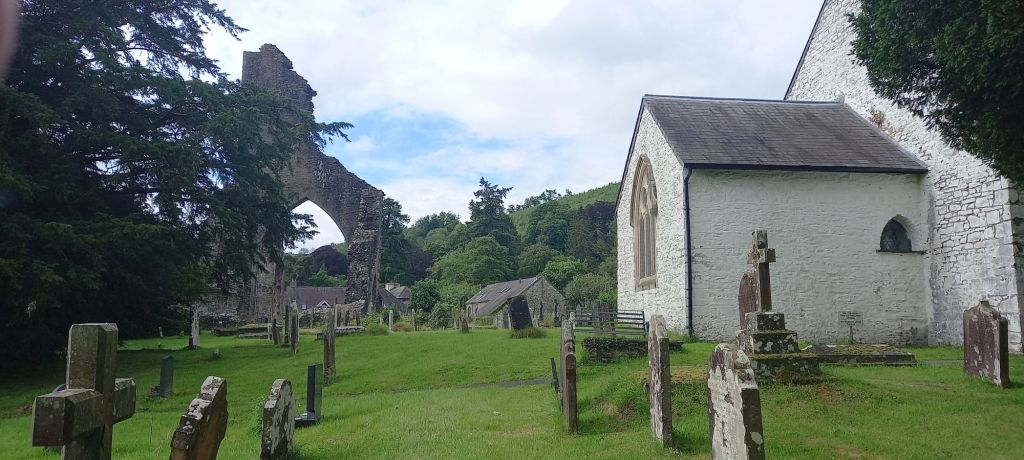
My camping stay over was at a Shire horse farm, with a field for campers. After the rainy night under canvas, I had some breakfast in the cafe area, with poster size photos of the grand horses on wall around. Next I headed further in land, towards the Brecon Beacons park. For third night of rainy camping, I arrived at the village of Talley and was supprised by a welcome sign for tea, coffee, and ice creams at the church hall. Donations given for the church and hall upkeep. A lady arrived a while later (Church Warden) and after a chat agreed to me sleeping in the hall for the night. Talley was founded in the 12th century by Lord Rhys (of South Wales) for the Premonstratensians order. The abbey ruins although small, had an impressive church tower overlooking the village church.

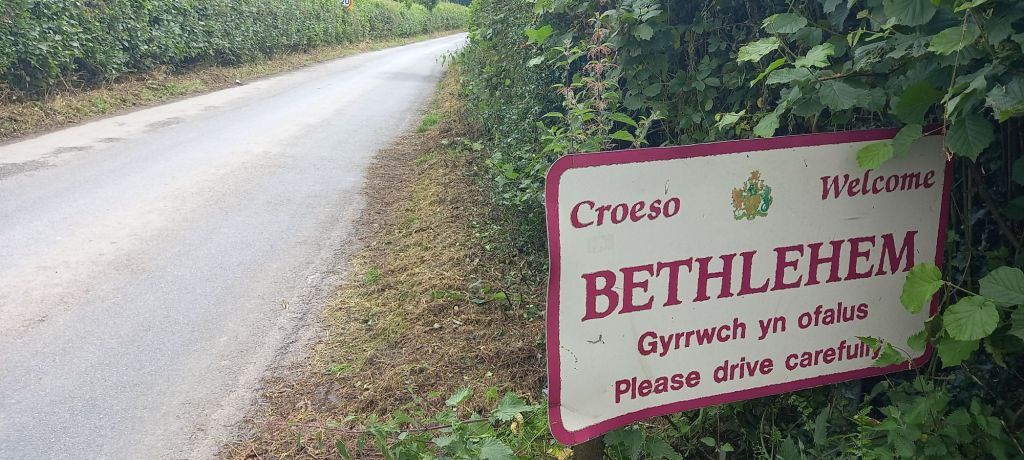
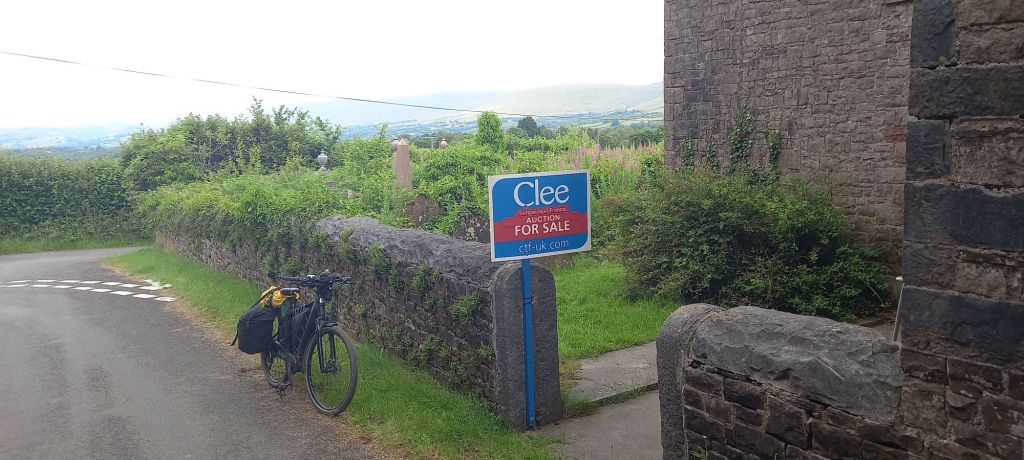
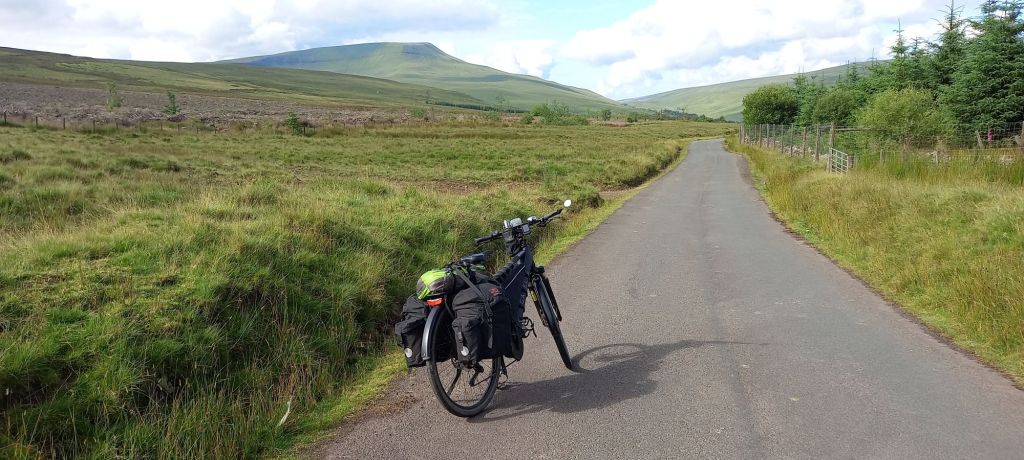
On the fourth day’s cycle, I passed through farms, some seemed abandoned, chapels and new housing developments. I was sad to see some chapels had a for sale sign outside. Then the clouds became darker and the terain more mountainous. I was passing through the Black Mountains and up to the Brecon Becons resting at the YHA hostel, alongside a busy main road.
On the Saturday, I headed southwards through some valleys to Port Talbot on the coast. After cycling through housing estates and the large steel industrial area, I followed the cycle route signs and got to the camping spot marked Red Rock wild camping. There was a lady at the entrance who took my details and mentioned if I didn’t want a noisy evening, to keeping away from a group of campers in one area. The weather that day was mainly warm and sunny and I had a sence of being in the working heartland of Wales.

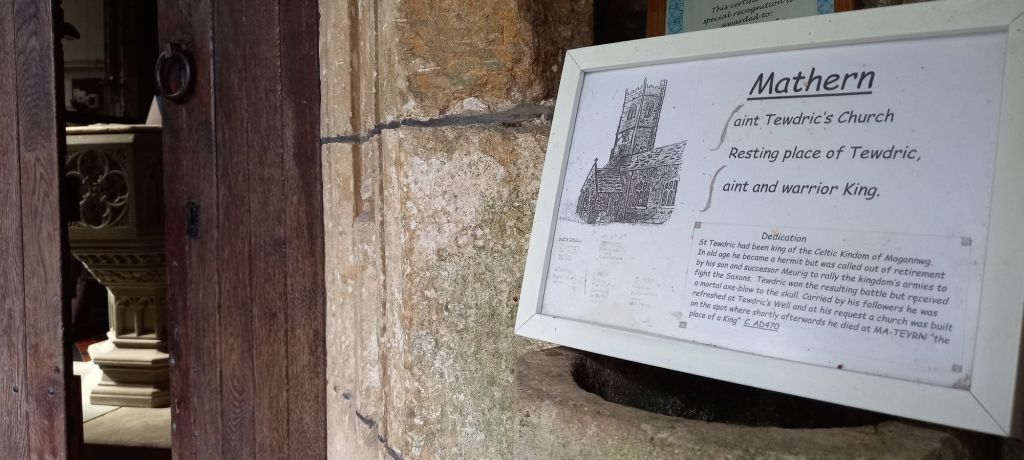
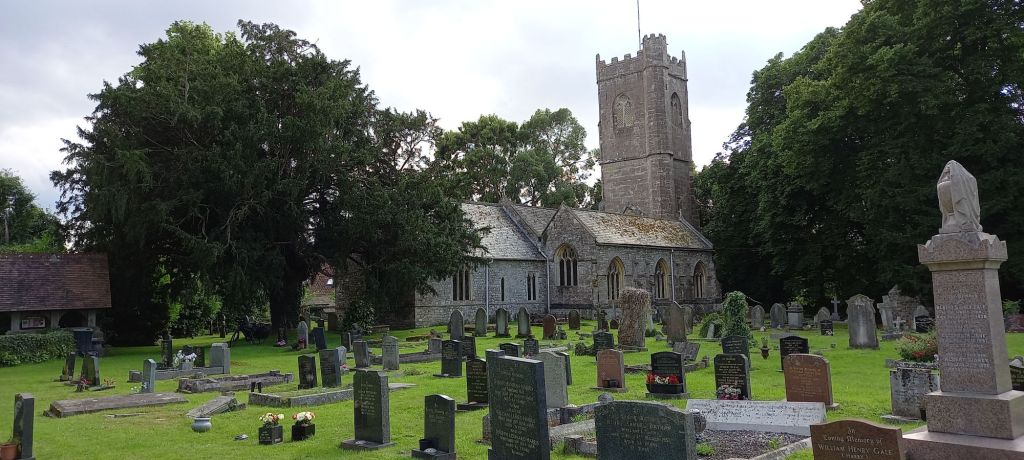
On the Sunday and Monday, I continued firstly to Barry, made famous by the TV series “Gavin and Stacey”. The hotel there was basic, but felt very comfortable to the previous nights camping. Then to Caerphilly for fish n chips and to visit the castle. Also for some comfort on another rainy day. Thirdly to Newport, visiting the cathedral and later that day to St Tewdrics Church in the village of Mathern. Tewdric was an early Celtic king made famous for keeping the invading Saxons away, but after receiving a deadly axeblow requested the church to be built in the present day location. The day’s cycling ended in Chepstow, Monmouthshire, reflecting on the wet weather and changing landscapes that concluded the week in south Wales.
Talley Abbey

Route 4: Hexham – Holy Island

I took my leave on a rainy Wednesday morning and arrived at the campsite by mid afternoon. The wind had picked up and my feet were nearly numb as the water soaked through my shoes and socks. The site warden took pity and invited me in to his caravan for a cupa. With a cigarette in one hand and keeping small terrior at bay with the other, he told me that he had retired early due to ill health, and worked as a joiner managing a team. I shared about why I was passing by and where I had been so far.

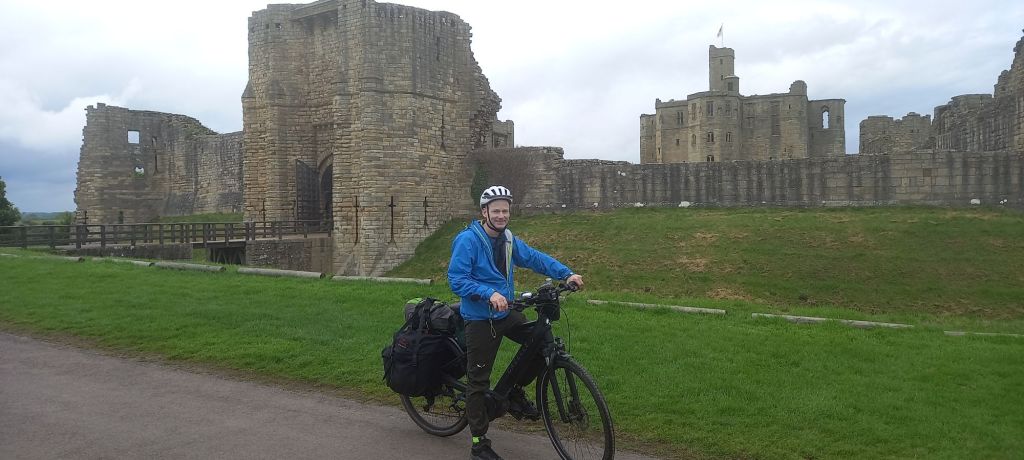
The following morning, the rain continued and after cycling for a couple hours found a cafe to have a fried breakfast. (Rothbury) The route took me through a couple of river crossings that were now impassable due to the water level. I got to the next campsite near Walkworth, passing the castle beforehand. Then on to Alnwick the next day visiting St Michael’s church and Alnmouth coastal village. The hostel was historically the main police station and prison and the backyard seemed a suitable place to put out the wet clothes to dry. In the evening I relaxed in the lounge area and had some cultural exchanges with a some folk from Melbourn Australia and a student from Beijing, China.

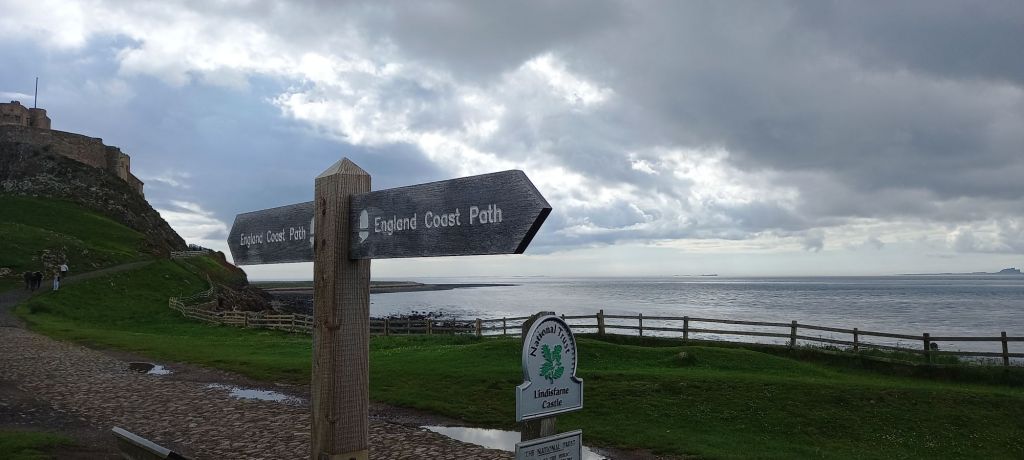
The last leg of the tour took me mainly on the coastal area, passing by Seahouses, Bamburgh castle and on to the campsite near the Holy Island (Lindisfarne) causeway crossing. With the sound of the main train route, north/south near by and fields of wheat and barley all around, I settled down to rest, looking forward to the final day.

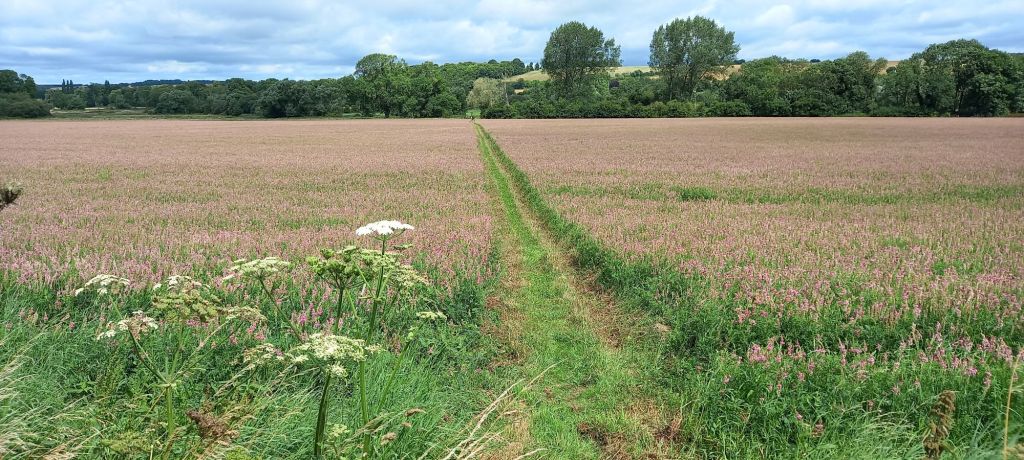
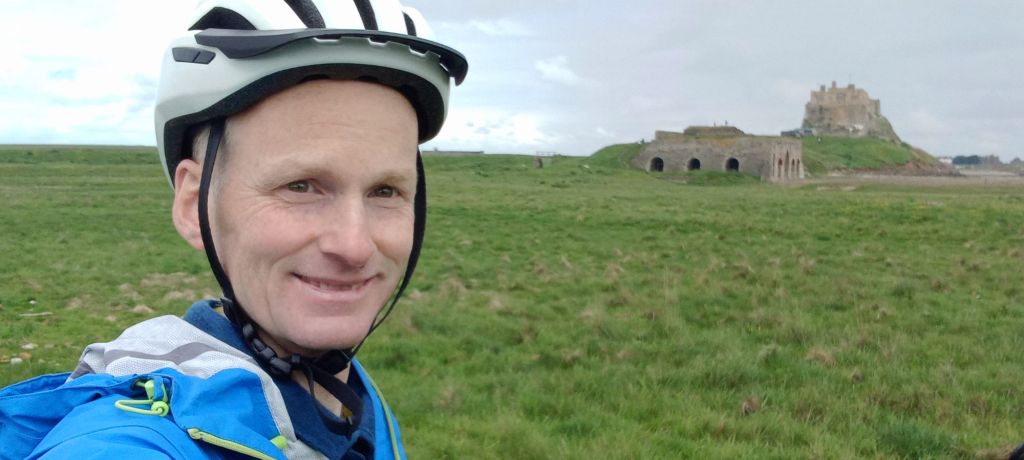
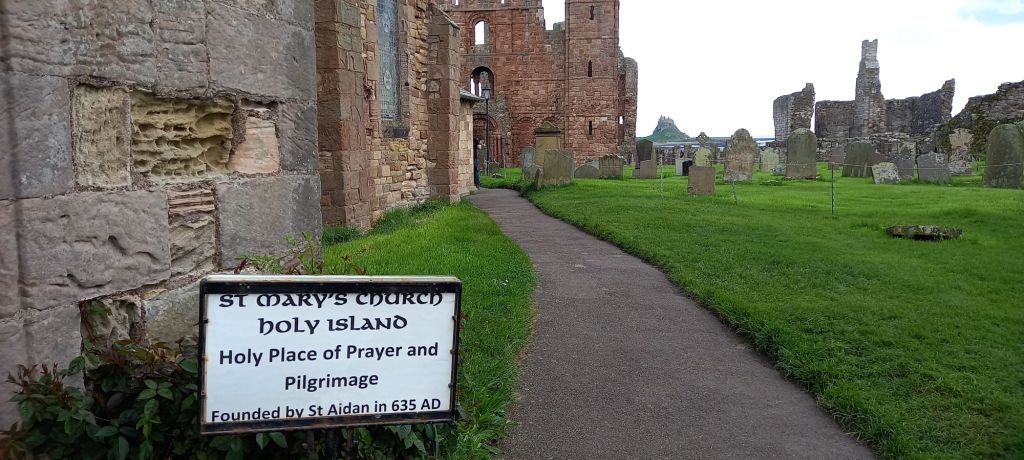
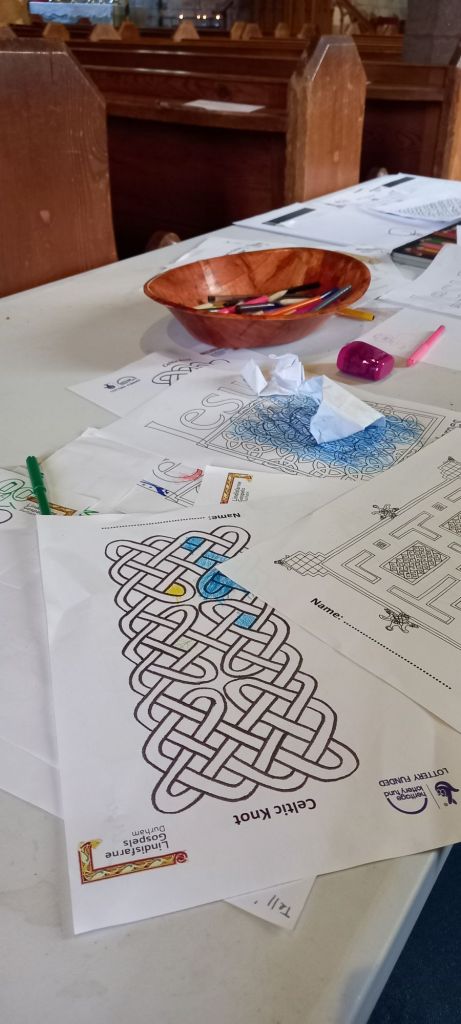
As more rain was expected by late morning, I headed towards the causeway for 9am, the tide due to be out for about 8am. The sun seemed to guide the way across and patches of pink Hop Trefoil coloured the ⁰sides. Other visitors had also began to arrive and I quickly looked for a good position to make a picture, without too many people included. I rode passed the castle and then to St Mary’s church, founded by St Aiden. There was an area for children to colour in Celtic shapes and some words of reconciliation near the alter, given by the church of Norway in 1993, marking the 1200 year anniversary of the first Vicking raid.

At 12 noon I joined daily gathering for prayer, led by Faith of the Aiden and Hilda, at their prayer room. She said she remembered me at their group gathering at Scargill in December 2023. To close the route, I headed up the coast to Berwick Apon Tweed, sighting the Royal Border Bridge, for my return train connection.

Prayer room, Holy Island.

Route 3: Bishop Auckland – Hexham.

I arrived at Bishop Auckland train station on Tuesday May 16th, and rode to the little church in the village of Escombe. Like many churches, it was renovated in the Victorian era, though the church itself, gives an idea of the early church before the Norman conquest.

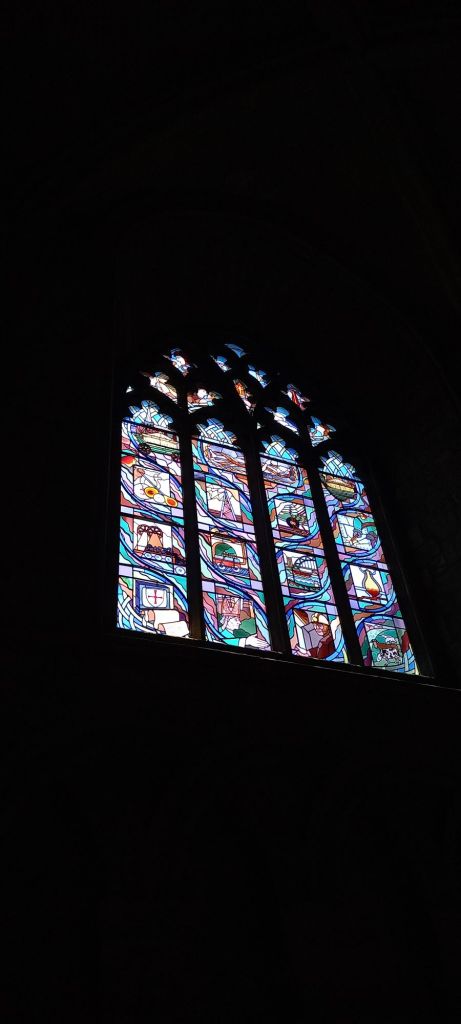
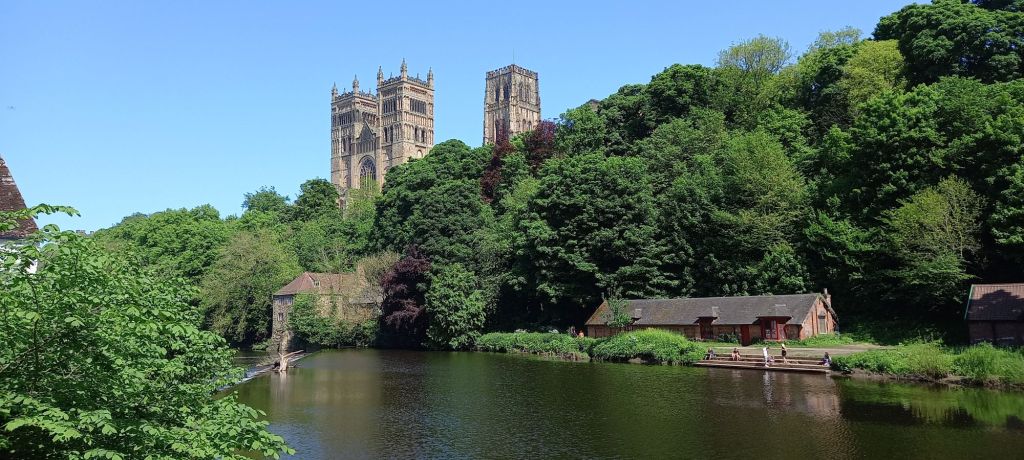
Next I headed to Bishop Auckland, and after the overnight stay, rode onwards to Durham. The weather was dry and mostly sunny, and I walked along the river Wear and then up to the cathedral itself. The first sight, was a large grass lawn and in the middle were some tents with young people sat together chatting. I made an enquiry and was told that they were groups from Jewish and other Middle eastern backgrounds making a protest about the troubles, and that a peaceful resolution needed to be addressed. Then went on into the cathedral and walked by tombs of Bede and Cuthbert. There was also a window with a modern reflection of the comunities in the area, mining etc.

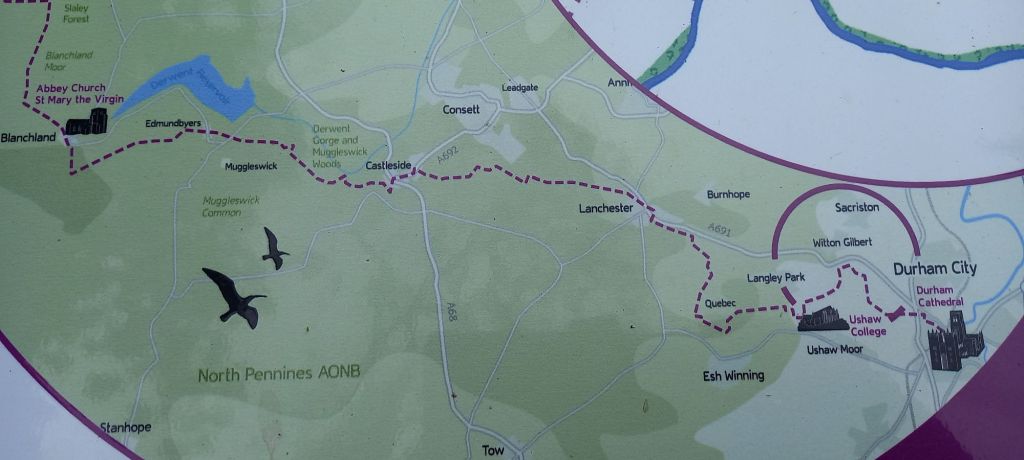
From Durham, I rode on towards Edmundbyers, mainly along a disused railway line, passing by small villages and churches, some offering a tea or coffee for the pilgrim. Then to conclude the route, arrived in Hexham on Tuesday 21st, weather becoming more cloudy with some rain now and again. At the hostel near by, I had breakfast with a group of walkers from Holland. They were eating left over pizza and I offered them some of my porridge & chopped apple, which one or two ate.

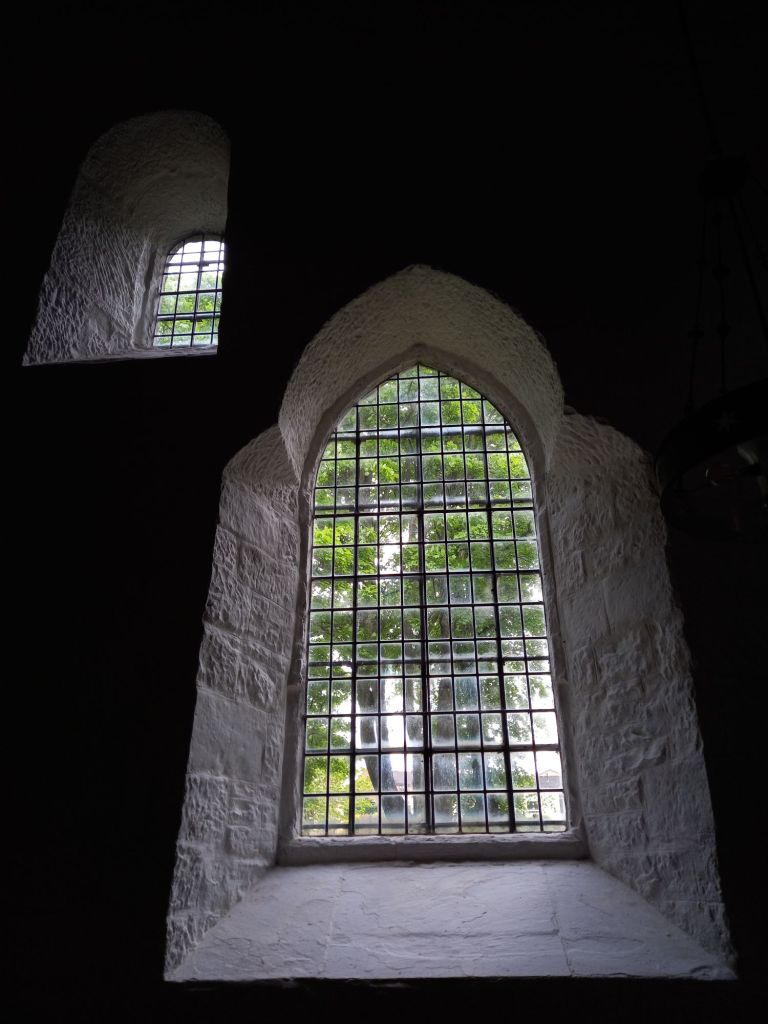
The Abbey and cript was the main focus in Hexham, and staff I thought friendly and happy to answer questions. The original founder was monk Wilfred, who after visiting Rome had the vision of a monastery to be set up in the area. Local builders were found and the materials collected from disused Roman buildings. The current building has many eras  (1000 years+) of rebuiding and additions, reflecteded in the Roman writing in the cript, Anglo-saxon stone work to the nave built in the early twentieth century.

The Night Stair, Hexham Abbey.